Swiss researchers at EPFL have pioneered a revolutionary technique using blood vessels to explore the human body. This hair-thin electronic device offers new hope for treating hard-to-reach brain tumors through minimally invasive means.
Doctoral student Lucio Pancaldi and Assistant Professor Selman Sakar from the Swiss Federal Institute of Technology Lausanne (EPFL) detailed their innovation in Nature Communications on December 22, 2020. Harnessing hydrokinetic energy—the mechanical power from fluid motion—they aim to access remote areas like the brain without invasive procedures.
Currently, much of the brain remains off-limits to medical tools due to their size. Traditional methods risk tissue damage by pushing and twisting guidewires to insert catheters into the cerebral vascular system.
EPFL's team created a microscopic device, demonstrated in the video at the article's end, capable of entering arterioles or even capillaries—the body's finest blood vessels. Insertion is swift and straightforward.
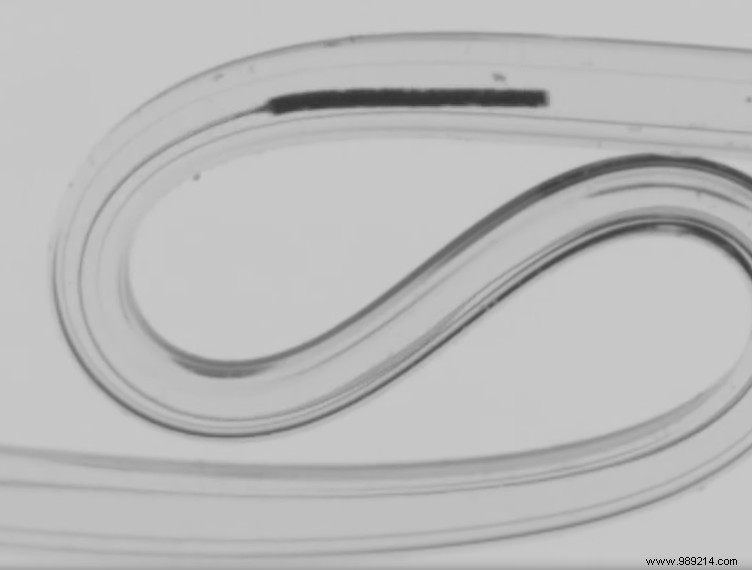
This device complements traditional catheters with its ultra-flexible, biocompatible polymer body and tip—likened to a fishing line and hook. Clinicians hold the proximal end, allowing blood flow to propel it through peripheral vessels. Gentle magnetic twists enable path selection without stressing vessel walls, as no mechanical force is applied.
The procedure slashes intervention time to minutes, not hours. Computer control handles activation and navigation.
Researchers envision robotic surgeons guiding it autonomously using MRI-derived vascular maps. Alternatively, a simple computer program could simplify manual control—no advanced AI required.
Initial tests succeeded on a rabbit's ear vascular system. Next steps involve full in vivo animal trials.
