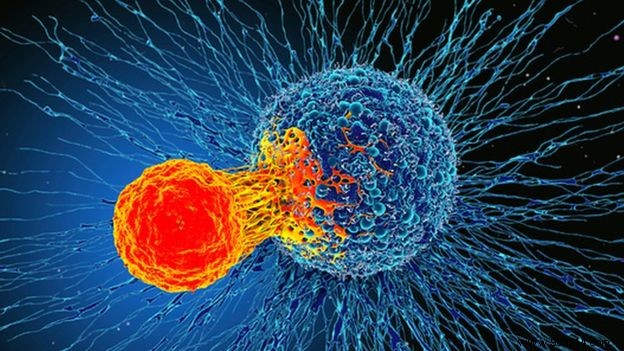
Groundbreaking research reveals that cancer cells can enter a dormant state to evade chemotherapy destruction. This discovery sheds light on poor treatment responses and why cancers often recur years later.
Cancer recurrence rates vary widely, and many tumors reemerge abruptly years after apparent clearance. That's why oncologists emphasize 'remission' over 'cure'. Remission means no detectable cancer cells via imaging or tests, but true recovery is declared only after a cancer-specific surveillance period.
For years, scientists have investigated how cancer cells remain hidden before resurfacing.
Prior studies identified tactics like infiltrating fatty tissues or achieving immune equilibrium. Now, a new paper in Cell uncovers a survival strategy borrowed from nature.
In this preclinical study using human colorectal cancer cells, standard chemotherapy induced a slowly dividing, dormant state. The cells' gene expression mirrored mouse embryos in "embryonic diapause"—a hibernation-like pause triggered by harsh conditions that halts development until survival odds improve.
Cancer cells appear to have evolved this mechanism to sidestep chemotherapy's lethal effects.
"The tumor behaves like a multicellular organism, slowing division and conserving energy for survival," explains lead author Catherine O’Brien. "This echoes how animals endure extreme environments."
Central to embryonic diapause is autophagy, a cellular recycling process. Researchers found cancer cells depend on it too. Blocking autophagy prevented dormancy, leaving cells vulnerable to chemotherapy eradication.
Aaron Schimmer, from Princess Margaret Cancer Center, highlights its implications: "We didn't realize cancer cells act like hibernating bears. This work shows how to disrupt their slumber, preventing unexpected wake-ups and relapses."
