Some organs are indispensable for life, while others can be removed with minimal impact. But what’s the exact total?
Listing all human organs is no simple task. The challenge lies not in overlooking components, but in agreeing on the definition of an organ. Most experts define it as a collection of tissues performing a specific physiological function. Under this standard, anatomists have traditionally identified 78 organs in the human body (for both men and women). Notably, bones and teeth are counted as single entries in this tally.
Of these, just five are absolutely vital: the brain, heart, liver, at least one kidney, and at least one lung. The brain oversees motor and cognitive functions; the heart drives circulation. The liver detoxifies blood and stores nutrients; lungs enable breathing; and kidneys filter waste through urine. Total failure of any spells death.
Many other organs, however, can be lived without—or replaced by medical devices.
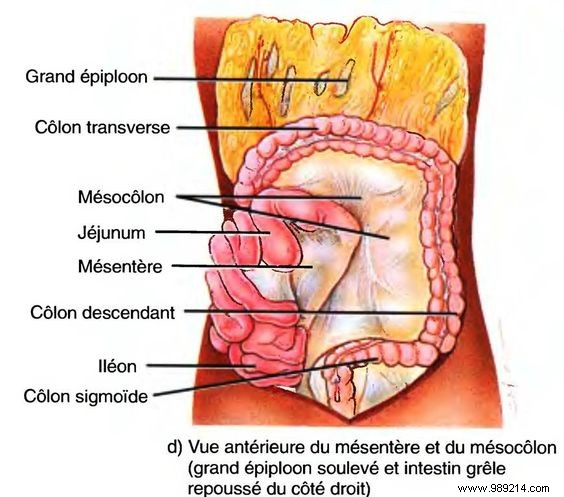
This classic count of 78 has evolved. In 2017, researchers at University Hospital Limerick published findings reclassifying the mesentery as the 79th organ.
The mesentery is a double-layered fold of peritoneum that anchors the small intestine to the abdominal wall’s posterior side. It houses nerves and blood vessels for the intestine. Previously viewed as fragmented, new evidence shows it as a continuous organ.
Then, in March 2018, scientists proposed the 80th organ: the interstitium, a network of fluid-filled spaces between tissues.
In histology—the study of tissues—perspectives shift. Dr. Lisa M.J. Lee of the University of Colorado views each of the 206 bones as an individual organ, forming an "organ system" collectively. This bumps the count to 285. Factor in teeth (previously one organ), and it grows further.
The possibilities multiply endlessly: ligaments, tendons, or billions of nerves (previously counted as one). Ultimately, as Dr. Lee advises her students, embrace the ambiguity and prioritize holistic body care.
