Did you know even Olympic sprinters can't match a domestic cat's speed? A recent study from Germany's University of Stuttgart reveals the biomechanical factors capping maximum human sprint velocity.
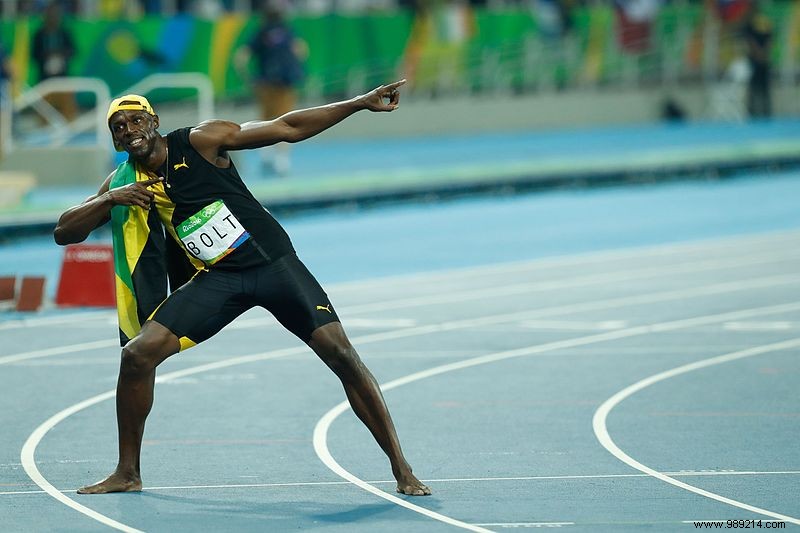
On August 1, 2021, at the Tokyo Olympics, Italy's Lamont Marcell Jacobs claimed gold in the 100m final with a stunning 9.80 seconds, edging out Fred Kerley (9.84s) of the U.S. and Canada's Andre de Grasse (9.89s). Jacobs fell short of Usain Bolt's world record of 9.58s, set across 2008, 2012, and 2016. Bolt hit a peak of 43 km/h—impressively fast for humans, yet slower than a typical house cat.
Against agile wild animals like antelopes or cheetahs, top sprinters wouldn't compete. Biomechanist Michael Günther and his University of Stuttgart team explored what determines peak sprint speed across species. Their forthcoming paper in the Journal of Theoretical Biology (August 21, 2021) outlines the physical laws governing maximum running speeds in the animal kingdom.
The researchers developed a sophisticated model integrating dozens of variables to pinpoint body traits that optimize running speed, grounded purely in physics. Key parameters included body shape, force dynamics, and gait geometry—totaling around 40 factors.
Two primary constraints emerged: air resistance, which opposes leg propulsion, and inertia, the challenge of accelerating mass from a standstill. While air resistance scales predictably, inertia rises with body mass.
Animals need time to overcome their mass during acceleration. The study suggests an optimal body mass around 50 kg—common in antelopes and cheetahs—for balancing these forces. Researchers conclude that surpassing Bolt's record, if possible, offers razor-thin margins. Experts widely agree breaking 9.50 seconds seems improbable.
