From Japan and China to India, select martial arts target vital points—vulnerable body areas that can deliver severe damage and neutralize opponents. But do these points hold up under scientific scrutiny?
In Japanese traditions, sappō employs pressure or strikes on kyūsho, highly vulnerable body zones. Take the carotid artery's baroreceptors, which relay blood pressure data to the brain. Compressing them signals dangerously high pressure, triggering a rapid depressurization.
The Shotokan Karate School in Chagny, Saône-et-Loire, stresses that mastering kyūsho is vital for karateka. These points span the body: upper regions (face, neck, nape, skull), midsection (chest, solar plexus, stomach, kidneys, back, ribs), and lower areas (legs, lower abdomen).
Eric Garnier Sinclair, instructor with the Art to Stay Alive (ADRV) collective in Taiji Qigong, Krav Maga, and pankration, references WWII-era Unit 731 research in his blog. This work highlights the intricate, often enigmatic nature of vital point techniques. He also links them to traditional Chinese medicine (TCM), notably acupuncture.
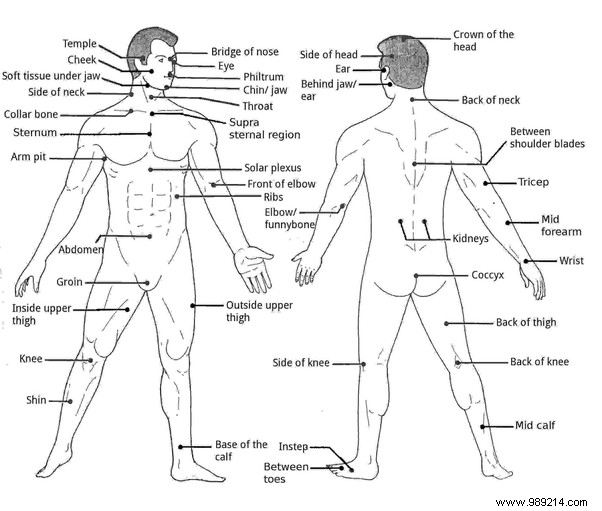
Strikes to the solar plexus, for instance, carry long-term heart risks, aligning with points on the conception vessel meridian. Or consider twisting both hands at the iliac crests—the 'bulges' above the hips—which can impair kidney function via natural physiological mechanisms.
Experts catalog 365 vital points: 36 lethal, 72 for stunning, and more. Targets include nerves and plexuses for paralysis, blood vessels for clots in veins and arteries, or meridians to block energy flow, causing delayed death. Nerve strikes, most common, hit the autonomic, central, and peripheral nervous systems.
Western views often label TCM-related concepts pseudoscience. Yet martial artists, backed by practice and history, affirm their reality. A seminal text is The Sublime and Ultimate Art of Vital Points (1998) by Fujita Saiko and Henry Plée.
