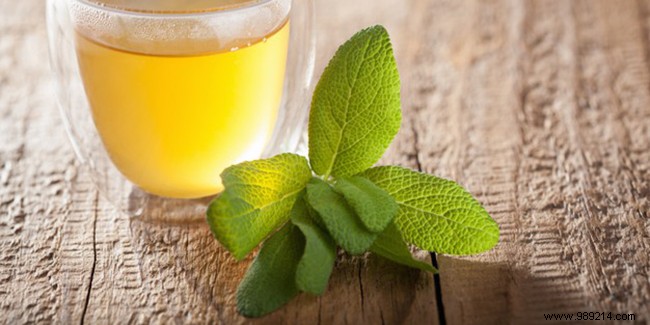
Sage (Salvia officinalis), also known as Provence tea, Greek sage, or sacred herb, has been valued for centuries for its medicinal and culinary properties. Belonging to the Lamiaceae family, its fresh leaves are commonly prepared as infusions, tinctures, or essential oils to address everyday health concerns.
Since antiquity, sage—derived from the Latin Salvia, meaning "to heal"—has been a staple in herbal remedies. Romans used it to treat infertility, and it has been cultivated since the 13th century for aromatic and therapeutic purposes. King Francis I promoted its use in "arquebus water" for gunshot wounds. Today, the European Medicines Agency acknowledges sage's efficacy against:
This perennial herb reaches up to 80 cm tall, thriving in dry, sunny areas around the Mediterranean basin. It features light green, oval, woolly leaves harvested in summer and purple or blue spike-like flowers. In herbal medicine, the leaves are the primary component.
Sage essential oil contains:
For sore throats, prepare an infusion with three dried sage leaves in a cup of boiling water for 10 minutes, then gargle 3-5 times daily.
To support digestion, dilute 2 ml of sage tincture in a glass of water and take twice daily.
Sage helps manage menopause symptoms like hot flashes and reduces excessive perspiration.
Use as a mouth rinse for gingivitis, tonsillitis, or canker sores due to its anti-inflammatory effects.
As a nerve tonic, it benefits those with:
Additionally, sage acts as a hypoglycemic, helps combat fever, and offers antiseptic and astringent properties for insect bites, wound disinfection, and healing.
Steep 1-3 dried sage leaves in 250 ml of boiling water for 10 minutes. Limit intake to three cups daily, regardless of the condition.
Per the European Medicines Agency, limit internal use to 15 days and external to 8 days. Consult a healthcare professional for any undiagnosed issues.
Avoid sage during pregnancy, in those with epilepsy (due to neurotoxic thujone), breastfeeding, children, allergies, or history of hormone-dependent cancers (e.g., breast, prostate).
Sage is generally safe, but exceeding 15g daily may cause hot flashes, palpitations, dizziness, or seizures.
No interactions noted with other herbs or supplements. However, its high vitamin K content has anticoagulant effects—use caution with blood thinners. It may interact with benzodiazepines or neuroleptics.
If symptoms persist, seek medical attention immediately.
