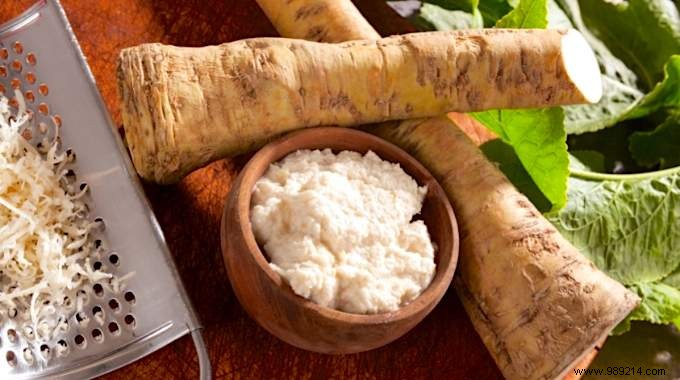
Horseradish, a time-honored root vegetable often overlooked today, offers a wealth of health benefits rooted in centuries of traditional use. Also known as German mustard or horse radish, its pungent, spicy flavor is sometimes confused with wasabi. Belonging to the Brassicaceae family, it originates from Eastern Europe and Asia Minor. The ancient Greeks, Romans, and medieval healers prized its medicinal virtues.
Explore these 10 underappreciated health benefits of horseradish:
 Contents
Horseradish effectively combats digestive disorders. If your intestinal transit is sluggish, this root can provide relief.
It promotes smoother intestinal transit and digestion, helping break down fatty foods more easily. It also reduces intestinal gas and provides a mild laxative effect.
Best of all, it cleanses the intestines. Its depurative properties help purify the gut and eliminate parasites, making it a great choice for detoxification.
Horseradish is rich in vitamin C and excels at liquefying secretions.
This makes it an excellent remedy for easing sinusitis and bronchitis symptoms by decongesting the bronchial tubes.
For a stuffy nose, try seasoning your meals with horseradish and a squeeze of lemon—you'll feel relief quickly.
Rich in allicin and sinigrin, horseradish boasts powerful antibiotic compounds.
These deliver a bactericidal effect, significantly relieving urinary tract infections. Its diuretic properties further aid in flushing out harmful bacteria.
One of horseradish's most established traditional uses is soothing joint pain from rheumatism, osteoarthritis, or arthritis—a practice dating back to the Middle Ages.
Create poultices by grating the fresh root, mixing with water into a paste, and applying directly to the skin for targeted relief.
Horseradish poultices work wonders to relieve itching and burning from insect bites like those from mosquitoes, spiders, wasps, or horseflies.
Grate the root, mix with water, and apply to the affected area for fast soothing.
Surprisingly, horseradish contains more vitamin C than oranges, making it a potent ally against fatigue and for bolstering the immune system.
Historically used to combat scurvy—a vitamin C deficiency affecting sailors and prisoners—incorporating it into your diet prepares you for cold seasons.
With its analgesic and anti-inflammatory properties, horseradish used as a mouthwash can ease the pain of canker sores effectively.
Whether applied as a poultice or added to meals, horseradish stimulates and improves blood circulation while helping regulate blood pressure.
Its antibacterial action curbs bacterial growth in the mouth, freshens breath, and protects teeth. Use it as a natural mouthwash or in your diet.
Horseradish is a potent bactericide, largely due to its high allicin content—similar to garlic. It combats pathogens like E. coli and Staphylococcus aureus.
Horseradish is loaded with vitamin C, B2, B6, and minerals like magnesium, calcium, phosphorus, and iron.
Key compounds include sinigrin, a glucosinolate responsible for its pungent taste and anti-inflammatory effects (also found in radishes, cabbage, and mustard).
It also contains high levels of allicin, a sulfur compound with antibacterial, antiseptic, and anti-inflammatory properties. Preliminary research suggests potential anti-cancer effects, though more human studies are needed.
All these benefits in one versatile root—don't miss out!

There are countless ways to harness horseradish's goodness:
- Juice it (20g daily) using a juicer; it pairs beautifully with tomato juice.
- Grate for poultices.
- Use as a condiment in the kitchen—its peppery flavor rivals mustard. Add to vinaigrettes, sauces, or mayonnaise.
Traditional pairings include grated with red beets (chrein), carrots, tomatoes, or red cabbage.
It's the star of English horseradish sauce with roast beef, Italian omelets (rafanata), and accompaniments to meat and fish in Austria and Germany. In the U.S., it's a burger sauce essential.
Never cook horseradish—heat destroys its medicinal properties and flavor.
To prepare: Peel like a carrot, grate finely, and avoid the tough core.
Fresh roots last months in a perforated plastic bag in the fridge's vegetable drawer. Grated horseradish must be consumed immediately to retain flavor and benefits—avoid storing in airtight containers. Freezing dulls its spice.
Season: September to March. Find fresh in supermarket produce sections (Auchan, Leclerc, Carrefour, Biocoop). Jarred pickled or ground versions are in the condiments aisle for convenience.
Select firm roots without damage or stains, ideally with vibrant green leaves. Opt for straight, sturdy specimens.
Avoid if allergic to horseradish or its components. Pregnant or breastfeeding women should steer clear due to potential glucosinolate toxicity risks via placenta or breast milk. Consult a healthcare professional before use, especially with medical conditions.
