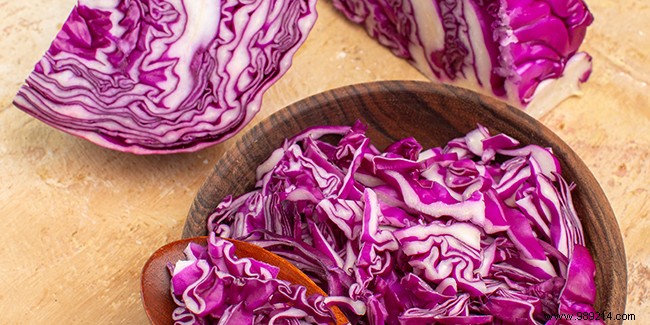
Red cabbage, a staple in salads, cooked dishes, and fermented sauerkraut, belongs to the Brassicaceae family (Brassica oleracea). Originating from Central Europe, it offers a mild flavor and a wealth of nutrients with established health benefits, as supported by nutritional research.
As a hardy herbaceous plant, red cabbage stores well for up to three weeks in a cool place, with peak season from January to March. Its subtly sweet taste delivers essential vitamins and minerals that support overall wellness and energy replenishment when consumed regularly.
Key nutritional values per 100 grams:
It also provides smaller amounts of selenium, sodium, zinc, vitamins E, K1, B1, B2, B3, B5, B6, beta-carotenes, manganese, iodine, iron, chloride, lipids, carbohydrates, proteins, and water.
Rich in dietary fiber, red cabbage promotes healthy intestinal transit. Its antioxidants may help lower the risk of certain cancers. At just 36.5 kcal per 100 g, it's an excellent choice for weight management diets.
Vitamin C in red cabbage supports skin repair, wound healing, immune function, and combats aging from free radicals, drawing from its role in collagen synthesis.
Ideal for minor digestive issues, red cabbage helps regulate bowel movements, soothe heartburn, nausea, hiatal hernias, and hepatobiliary discomfort.
High in calcium for bone, muscle, and blood pressure health; mineral salts and vitamins combat anemia. Vitamin K aids blood thinning, while potassium supports cardiovascular health. Its hypoglycemic properties benefit diabetes management, and its sap acts as a natural vermifuge against roundworms and pinworms.
Apply raw cabbage leaves as a poultice to heal minor wounds, ease rheumatism, muscle pain, headaches, sciatica, or inflamed joints. Leave on as long as possible, even overnight for rheumatic issues.
Consume raw to preserve nutrients or cooked briefly to avoid a sulfurous odor from overcooking. Incorporate into diverse recipes, especially in winter, to boost vitamin intake and immunity.
Avoid if on anticoagulants due to vitamin K; limit to 250 g daily for others and consult a doctor. Those with IBS may experience bloating or discomfort—introduce gradually and seek medical advice. Cabbage may reduce efficacy of acetaminophen; monitor medication interactions.
