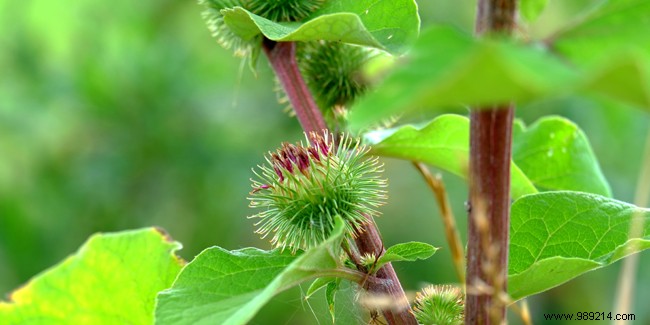
Burdock—known also as great burdock, burdock officinalis, cocklebur, tinea grass, or Niupolier—belongs to the Asteraceae family. It's easily identified by its striking red or pink tubular flowers and large, heart-shaped leaves. Common across Europe (outside the Mediterranean), it grows wild in meadows, along paths, and in mountain pastures. Herbal practitioners have long valued its roots and leaves for their therapeutic potential.
Traditional medicine in China and India has employed burdock for centuries to address abscesses, rheumatism, and respiratory infections. During the Middle Ages in Europe, it treated cancers, STDs, skin issues, gout, and kidney or bladder conditions. Native American healers used it to aid uterine contractions in childbirth. In China, it's called Ngau Pong; in Japan, Gobo, where the fresh root serves as a vegetable. By the 20th century, U.S. and Canadian preparations targeted cancer support.
The German E Commission noted in 1990 that evidence was insufficient for definitive therapeutic claims. However, in-vitro animal studies highlight burdock root's promising effects:
Though results are encouraging, human clinical trials remain limited.
For generations, herbalists have turned to burdock for its depurative, diuretic, sudorific, antitumor, and antiseptic properties, aiding natural detoxification. It's still recognized in pharmacopeias for benefits including:
Consult your doctor before use to ensure it's appropriate for you.
Burdock shows promise for acne, thanks to its polysaccharides, flavonoids, polyacetylenes, and phenolic acids that help regulate sebaceous glands. Combine root extracts with wild pansy for acne, or dandelion/nettle for liver drainage. It's also used for eczema, scabs, cracks, insect bites, and psoriasis—via teas or essential oils.
Burdock may stimulate scalp health and slow hair loss through its topical effects, though scientific proof is pending.
Steep 5g dried leaves in 1 liter boiling water for 10 minutes. Drink 2 cups daily.
Boil 40g roots in 1 liter water for 10 minutes. Consume 2-3 cups daily for up to 10 days, under medical guidance.
Take 2-3 capsules of root powder daily with plenty of water, as advised by a healthcare provider.
This hydroalcoholic extract: 10-30 drops in water, 3 times daily.
In a study of women aged 39-65, a burdock fruit extract emulsion reduced facial wrinkles after 4 weeks and improved skin markedly by 12 weeks.
Avoid if allergic to Asteraceae, or during pregnancy/breastfeeding. Use caution with hypoglycemic medications, as burdock may lower blood sugar.
Monitor use with hypoglycemic or antiplatelet drugs/supplements.
