Researchers have successfully implanted miniature human livers, developed from skin cells, into rats, where they functioned for four days.
In France, approximately 1,300 to 1,400 liver transplants occur annually (1,355 in 2019), yet around 3,000 patients remain on waiting lists. This organ shortage is a global challenge, prompting scientists to explore innovative alternatives for liver support.
Significant advances continue in this field. Recently, Brazilian researchers reported bioprinting liver organoids—miniature livers derived from human blood cells—capable of performing key liver functions.
A team from the University of Pittsburgh's Faculty of Medicine has pioneered a new method, bioengineering mini human livers for transplantation into rats to evaluate their functionality and longevity. Findings are detailed in the journal Cell Reports.
In this proof-of-concept study, researchers reprogrammed skin cells into stem cells, then differentiated them into various liver cell types. They decellularized rat livers—removing all native cells—and repopulated them with these human liver cells, allowing the organs to mature in about a month. Five specially bred rats, resistant to rejection, received the mini livers.
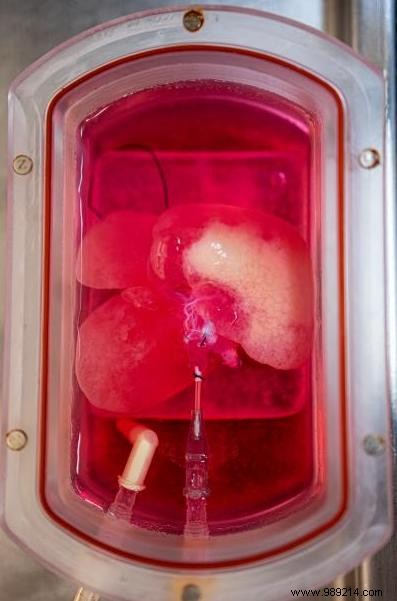
Post-transplantation, the mini livers demonstrated functionality for four days, with human liver proteins detected in the rats' blood serum. However, circulation issues arose around the transplant site.
These preliminary results hold promise for growing replacement organs to address donor shortages, though significant hurdles remain.
“In the near future, I see this more as a bridge to transplantation,” says lead author Alejandro Soto-Gutierrez. “For example, in acute liver failure, you might need a liver boost for a while instead of a whole new liver.”
The team acknowledges key challenges, including developing a functional vascular system to deliver oxygen and nutrients for clinical viability.
Source
