Groundbreaking research reveals that while the human body ages, the liver stays remarkably youthful through ongoing tissue regeneration. On average, this vital organ is less than three years old—no matter the person's age. Findings are detailed in the journal Cell Systems.
The liver's primary role includes detoxifying the body, a demanding task that damages its tissues. Yet, it excels at regenerating functional new tissue in response, driven by the proliferative power of its cells.
Maintaining high metabolic activity requires constant physiological replacement of liver cells, but studying this in humans has been challenging. Until now, it was unclear if parenchymal hepatocytes turn over continuously or persist long-term, like cardiomyocytes or neurons, which endure for decades.
To investigate, researchers employed mathematical modeling and retrospective radiocarbon birth dating. This technique dates cells using carbon-14 levels that spiked in the atmosphere from mid-20th-century nuclear tests.
Led by molecular biologist Olaf Bergmann at Dresden University of Technology in Germany, the team analyzed post-mortem tissue samples and biopsies from more than fifty individuals aged 20 to 84.
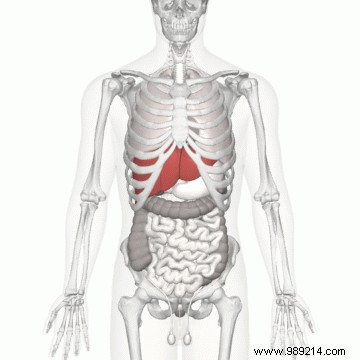
Unlike other tissues that decline with age, liver cells—hepatocytes—maintain robust renewal. The body precisely controls liver mass lifelong through ongoing cell replacement, keeping the organ effectively under three years old on average.
Not all hepatocytes renew at the same rate; turnover varies with ploidy level, or the number of chromosome sets in the genome. "Diploid" cells have two sets, while "polyploid" ones have three or more.
Diploid hepatocytes exhibited birth rates over seven times higher than polyploid ones, renewing far faster. This supports the view that human liver renewal relies primarily on diploid hepatocytes, as polyploid cells divide less effectively.
These insights illuminate key mechanisms of liver function, paving the way for better strategies to preserve health and treat diseases in this essential organ.
