Physicists from University College London have measured the individual masses of the 46 human chromosomes for the first time, leveraging the powerful X-ray beam at England's Diamond Light Source synchrotron.
Chromosomes, made up of DNA molecules wrapped around proteins, reside in the nucleus of our somatic cells. They carry our genes, passing them from mother to daughter cells during division.
In essence, chromosomes protect DNA from unraveling and maintain its structure during cell replication. Proteins like histones enable functions such as reading the genetic code, regulating division, and compactly packaging nearly three meters of DNA strands within our cells.
Each human cell contains 22 pairs of homologous chromosomes plus one pair of sex chromosomes, totaling 23 pairs.
First observed in the 19th century, chromosomes have been extensively studied to uncover their roles in living organisms. Yet, their precise mass remained elusive until now, requiring cutting-edge instrumentation.
In a pioneering study, UCL physicists used the Diamond Light Source—operational since 2007 in Oxfordshire, England—to calculate these masses. X-rays diffracted by the chromosomes produced interference patterns, enabling high-resolution 3D reconstructions.
Focusing on leukocytes (white blood cells), the team determined electron density within each chromosome. With known electron mass, they precisely calculated chromosomal masses.
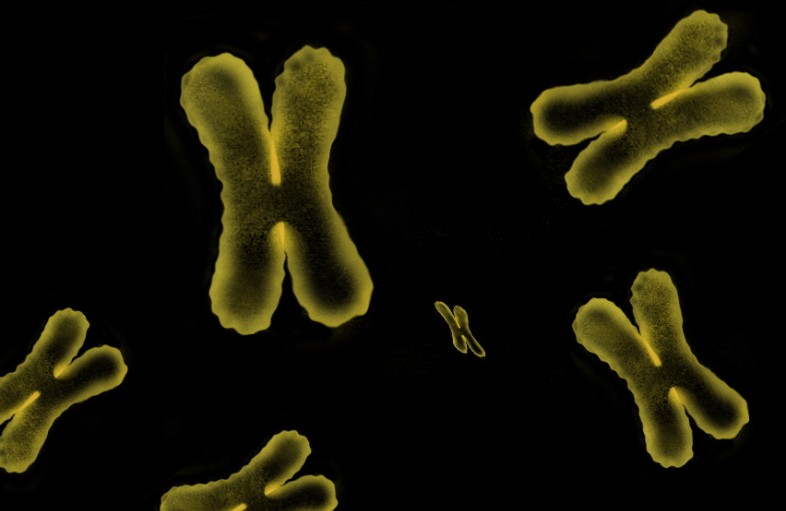
The 46 chromosomes in each cell collectively weigh 242 picograms (1 picogram = 10-12 grams)—about 20 times heavier than their DNA content alone. This unexpected result hints at undiscovered components, with potential implications for human health.
"A large amount of chromosome studies are undertaken in medical laboratories to diagnose cancer from patient samples," notes lead author Archana Bhartiya. "Any improvement in our ability to image chromosomes would therefore be very valuable."
Details are published in Chromosome Research.
