Spanish physicians diagnosed a rare parasitic hyperinfection in a 64-year-old man with metastatic lung cancer. Countless Strongyloides stercoralis larvae migrated beneath his skin across his entire body. Symptoms emerged shortly after high-dose corticosteroid therapy for malignant spinal cord compression.
This striking case, detailed in a recent New England Journal of Medicine report, involved a sewage management worker. Weeks prior, he sought treatment for a tumor compressing his spinal cord. High-dose glucocorticoids, administered for several days, suppressed key immune functions—unwittingly enabling the parasite's proliferation.
The culprit: Strongyloides stercoralis, a nematode known as threadworm that commonly infects humans and animals via contaminated soil or sewage.
Infection typically starts when larvae in contaminated environments penetrate intact skin unnoticed, migrating to the intestines. There, females embed in the small intestine lining, lay eggs, and release larvae into feces. Autoreinfection occurs as larvae reinvade perianal skin.
In this patient, prior episodes of eosinophilia—elevated white blood cells signaling possible parasitism—hinted at a latent infection over three years. Glucocorticoids triggered hyperinfection, with larvae disseminating widely.
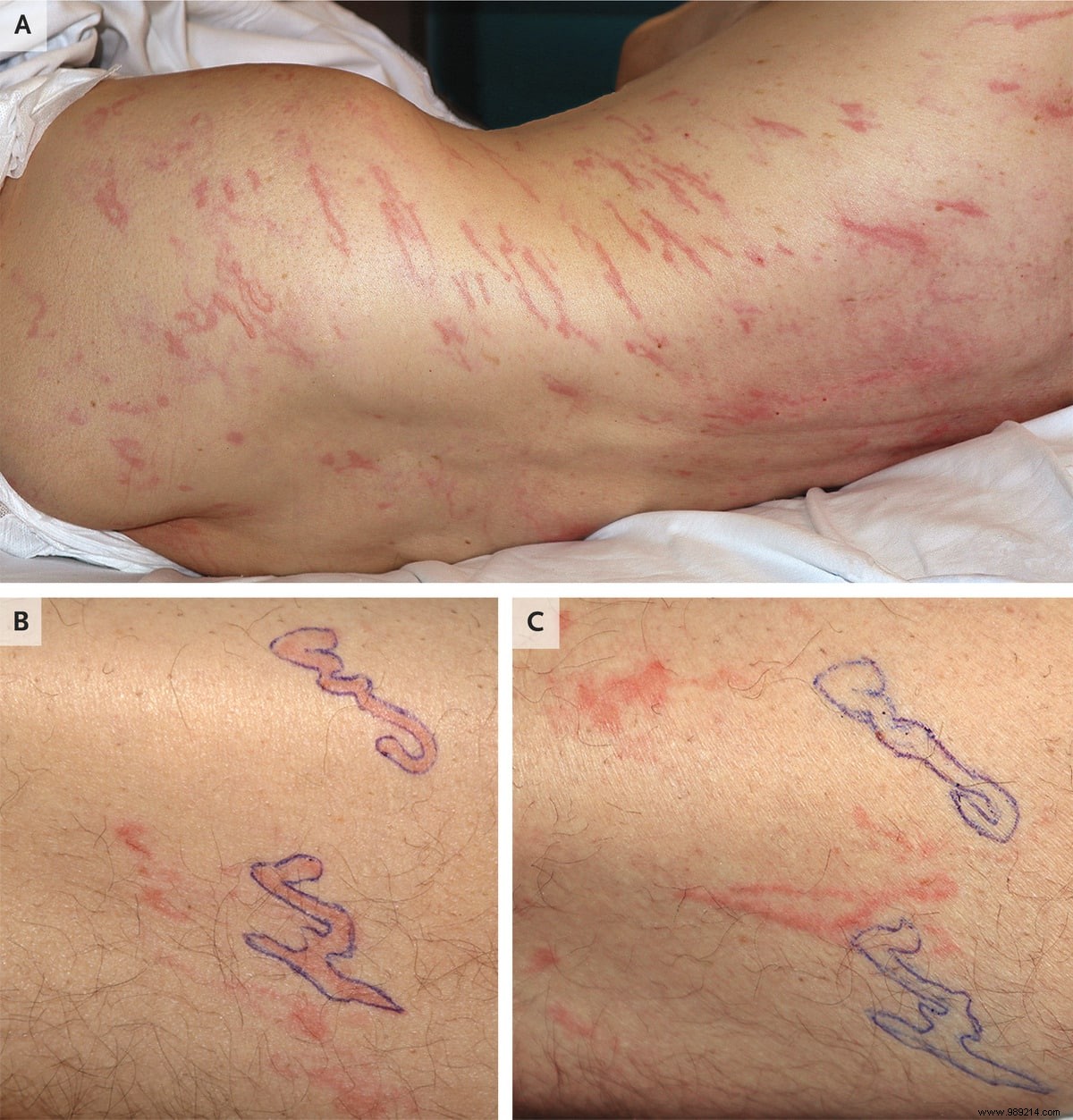
Mild diarrhea preceded itchy perianal rashes that migrated rapidly under the skin to his trunk and limbs—a hallmark of larva currens. Lesions were marked (panel B); 24 hours later, they had shifted (panel C).
Stool exams confirmed larvae, diagnosing Strongyloides hyperinfection syndrome. Prompt ivermectin therapy resolved the infestation and symptoms effectively.
