In NASA's Vascular Tissue Challenge, two teams from the Wake Forest Institute for Regenerative Medicine (WFIRM) developed functional human tissues with integrated vascular structures, surviving outside the body for up to a month—a pivotal advancement for astronaut health on long-duration missions.
On June 10, 2021, NASA announced the results of its Vascular Tissue Challenge, designed to spur innovations in creating functional organs from scratch. Teams from WFIRM, based in California, claimed the top two prizes using distinct techniques to engineer human tissues incorporating vascular networks. These tissues remained viable outside the body for approximately 30 days, marking a significant first, as noted by NASA.
While prior research has produced experimental artificial organs by culturing human cells within living hosts, WFIRM's innovations replicated the vascular architecture of the human liver in solid tissue form. Challenge manager Lynn Harper emphasized their biomimicry: the tissues, 3D-printed from human cells, sustained adequate oxygen and nutrient levels through functional blood vessel networks for a full month.
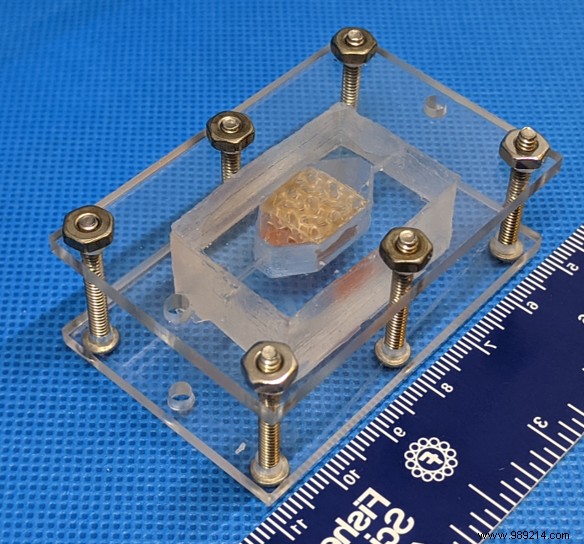
NASA launched the challenge to enable on-demand organ printing for extended spaceflights, where transplant-ready organs could be produced and stored—or even manufactured from astronauts' own cells to eliminate rejection risks.
A key requirement was dual-use applicability: these lifelike tissues hold promise for terrestrial uses, such as organ replacement in conflict zones or disasters, pharmaceutical testing, and disease modeling.
Next, the winning tissues will head to the International Space Station (ISS) for long-term studies on radiation's cellular-level effects on human biology.
