Researchers at the Hong Kong University of Science and Technology have unveiled a prototype bionic eye that replicates the human retina's structure. With refinements ahead, this innovation could restore vision for millions worldwide.
In its inaugural World Report on Vision in October 2019, the World Health Organization (WHO) revealed that 2.2 billion people live with vision impairment or blindness. Over a billion cases could have been prevented or remain untreated. A groundbreaking study from the Hong Kong University of Science and Technology, published in Nature on May 20, 2020, offers renewed hope.
While artificial retinas have aided those with macular degeneration for years, the EC-EYE (ElectroChemical EYE) marks the first fully bionic eye. It features tiny sensors mimicking human photoreceptor cells.
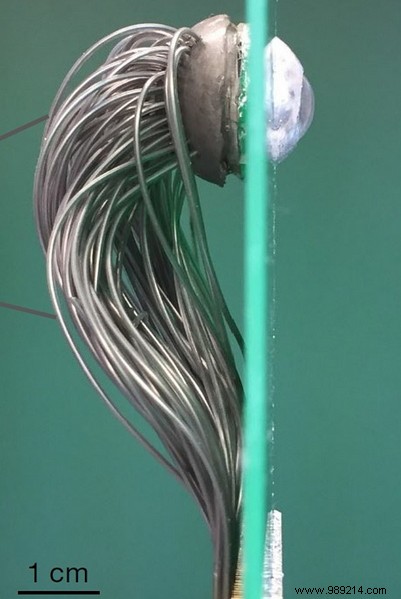
These sensors form an aluminum and tungsten half-sphere membrane, supported by silicone polymer. A front lens emulates the eyeball's optics, with ionic liquid inside for a more natural resemblance. Data processing relies on thin, flexible liquid metal cables encased in rubber.
The current prototype offers 100-pixel resolution, sufficient to recognize letters like 'E', 'I', or 'Y', with a 100° field of view—compared to the human eye's 160°. Yet, the research team is optimistic, projecting a bionic eye rivaling or surpassing human performance within five years.
Plans include boosting nano-sensor density to ten times that of human photoreceptors. The technology also holds promise for humanoid robots.
