In the early 1960s, French geologist Michel Siffre conducted a groundbreaking experiment to demonstrate that humans possess an internal clock dictating a 24-hour rhythm.
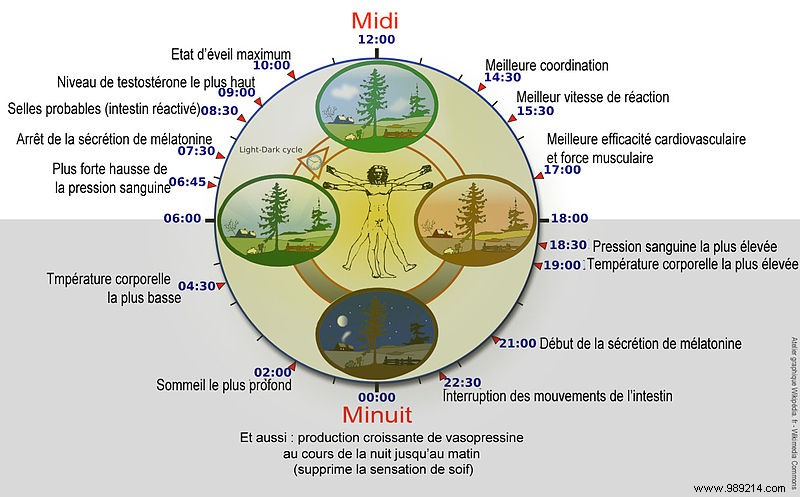
The circadian clock synchronizes our bodies to a 24-hour cycle, regulating essential functions like body temperature, blood pressure, hormone release, heart rate, and the sleep-wake cycle. It influences cognitive performance, mood, and memory as well.
Nearly all biological processes follow this rhythm. For instance, melatonin production ramps up in the evening for deeper nighttime sleep. Body temperature dips in the early morning, rises during the day, and intestinal activity slows at night. Alertness peaks from mid-morning to late afternoon and consolidates during sleep.
In 1962, Michel Siffre, a 23-year-old French geologist, emerged from the Scarasson chasm in the Marguareis massif (Ligurian Alps) after two months underground. Exhausted and emotional, his ordeal provided key insights into chronobiology, a nascent field at the time.
On July 17, 1962, Siffre descended without watches or radios. Three hours later, he set up camp at a depth of about 100 meters, where temperatures hovered at 3°C and humidity reached 98%—cold, damp, and pitch-black. He remained there for two full months, surfacing on September 14.
These conditions were perfect for studying physiological responses, particularly sleep-wake patterns, without external time cues. His sole link to the surface was a telephone for logging sleep cycles and meals.
Freezing dampness permeated everything—tent, sleeping bag, clothes. Siffre slipped into a semi-hibernation state, losing track of day-night cycles. His support team observed his biological rhythm shifting: he slept and woke progressively later each "day," eventually inverting relative to surface time.
He also experienced memory disruptions, forgetting meals and repeating a Luis Mariano record ten times. Upon emergence, he believed it was August 20—his internal time had passed at nearly half speed.
This rigorous experiment confirmed a universal truth: despite variable sleep-wake times, Siffre awoke every 24.5 hours, evidencing an innate circadian clock independent of external cues. Siffre later replicated it in 1972 and 1999, at age 60.
