Swiss researchers at EPFL are pioneering deep learning algorithms for SARS-CoV-2 screening using pulmonary ultrasound and respiratory sounds. Project leaders aim to deploy this innovative tool by year's end.
Current COVID-19 screening relies on PCR, saliva, and serological tests. However, a recent pre-publication from EPFL's Intelligent Global Health (iGH) initiative highlights a novel approach: deep learning algorithms. DeepBreath analyzes breath sounds, while DeepChest processes lung ultrasound images.
Since 2019, our team has gathered lung ultrasound images from SARS-CoV-2 patients. Breath sound data collection began in 2017. The objective is a smart digital stethoscope (pneumoscope) to differentiate viral from bacterial pneumonia and enhance diagnostic accuracy. Pre-COVID recordings now bolster DeepBreath development.
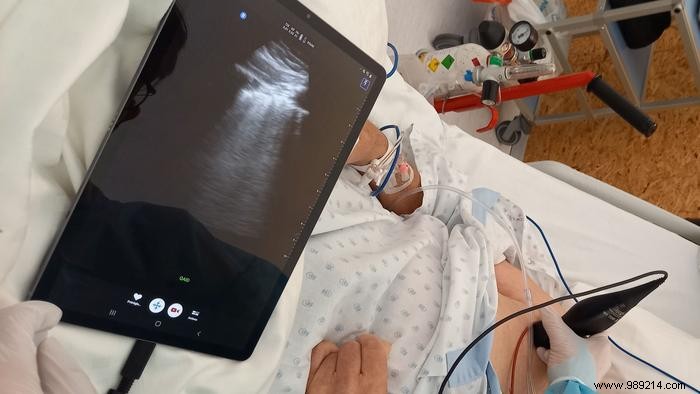
"We're refining and validating these algorithms, simplifying their 'black box' logic for clinicians. Our goal: robust tools extending beyond this pandemic," says Mary-Anne Hartley, the study's lead investigator.
"AI unlocks complex patterns in essential clinical exams like these. Results so far are highly promising," notes Prof. Martin Jaggi, EPFL's School of Computer and Communication Sciences.
This approach promises to streamline COVID-19 screening. Researchers target year-end deployment, with potential applications against other respiratory illnesses and antibiotic resistance.
Parallel EPFL efforts include cough sound analysis via smartphones for COVID-19 diagnosis.
In late October 2020, UK researchers unveiled an AI-powered rapid test: throat swab microscopy identifies SARS-CoV-2 markers, with machine learning delivering results in just five minutes. Early promise suggests commercialization in 2021.
