The COVID-19 pandemic is set to transform airport layouts dramatically. Experts envision vast, open spaces without barriers, where advanced technology handles security and boarding seamlessly.
As global airports slowly ramp up operations, full tourism recovery isn't expected until 2023. A Bloomberg article from August 6, 2020, highlights how low current traffic offers a prime opportunity for meaningful upgrades.
The piece features insights from Matthew Johnson, a key consultant on the Los Angeles International Airport (LAX) renovation. Traditionally, LAX followed an "X" layout: passengers funneled through a crowded central hub before heading to gates—a design common after the 2001 World Trade Center attacks.
Now, the SARS-CoV-2 pandemic demands profound adaptations to address ongoing health risks. Airports must rethink interior designs to prioritize safety and efficiency.
Johnson describes a casino-inspired model: expansive open areas without partitions. Security queues will vanish, replaced by cutting-edge tools like iris scanners and advanced X-ray systems. The focus is on seamless flow and minimal intrusion—no physical barriers impeding travelers. Passengers could even order food delivered directly to their seats.
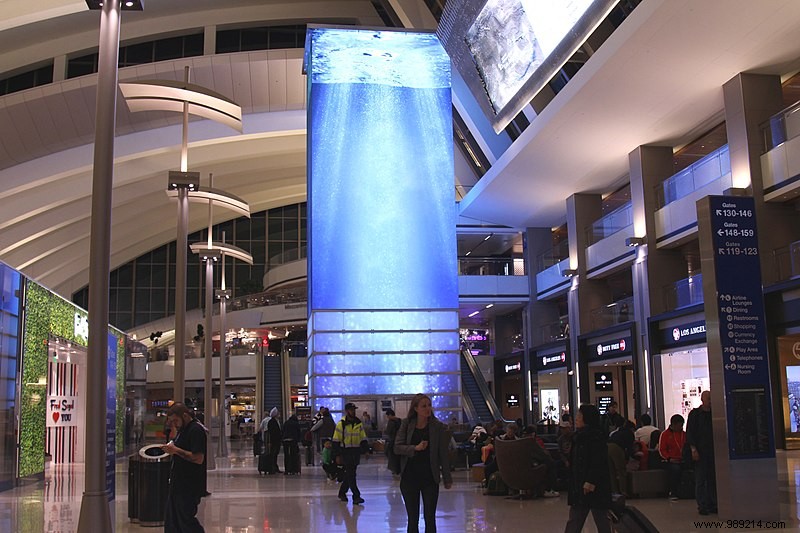
The vision eliminates screens and check-in counters, relying entirely on smartphones—from bag tagging to boarding. No need to present passports or tickets; facial recognition verifies everything.
Bloomberg also notes autonomous robots patrolling to disinfect surfaces and alert on mask non-compliance. Thermal cameras will scan for elevated temperatures.
Design innovation extends to aircraft interiors too. Studios like PriestmanGoode are enhancing personal space, hygiene, and stress reduction for passengers.
