While not yet conclusively proven, emerging research suggests that everyday breathing may contribute to COVID-19 transmission via microscopic aerosols. This debate has prompted U.S. officials to recommend masks in public spaces.
Initially, experts identified COVID-19 spread primarily through larger droplets expelled by coughs and sneezes. However, a concerning April 2, 2020, article in Science highlights potential risks from much smaller aerosols—about 1,000 times tinier than typical droplets—invisible to the naked eye. No studies provide definitive proof, but the implications are significant.
The Science piece references a letter from Harvey Fineberg of the National Academy of Sciences to Kelvin Droegemeier, White House Office of Science and Technology Policy director. With over 273,000 cases and 7,000 deaths at the time, this could lead to U.S. mandates for masks in public.
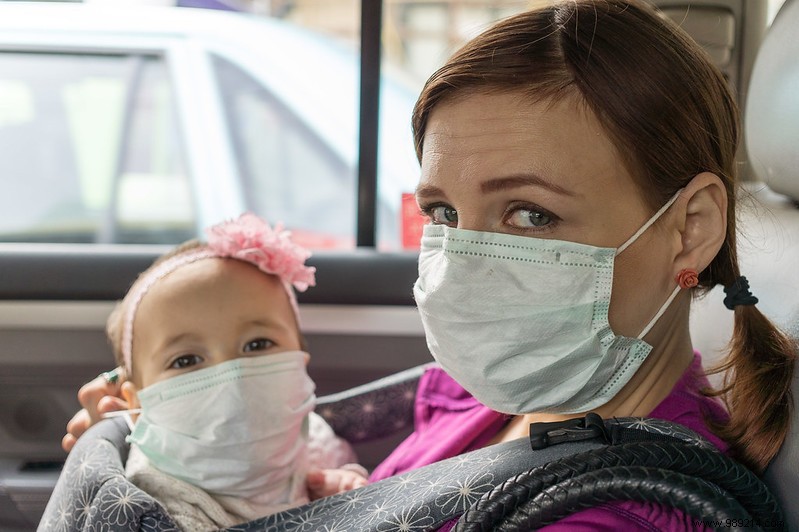
Confirmation of aerosol spread would reshape guidelines. Current safety distances of 1-2 meters suit larger droplets, which fall quickly due to gravity. Yet, an MIT researcher noted smaller droplets can travel farther—up to 8.2 meters—depending on expulsion velocity.
A March 17, 2020, study in the New England Journal of Medicine found tiny droplets lingering in air for hours. Harvey Fineberg's letter also cites a March 26, 2020, MedRxiv preprint from the University of Nebraska Medical Center, detecting viral RNA on 75% of surfaces and in air samples over two meters from patients. Notably, no viable virus was isolated, suggesting low infectivity.
A Wuhan study further noted that removing caregivers' protective gear—like gowns and hair covers—could reaerosolize the virus. As peer review continues, aerosol transmission suspicions grow, potentially explaining the virus's rapid spread.
