Healthcare workers in direct contact with COVID-19 patients face the greatest risks from the virus. Exposure levels vary widely across professions, and a compelling interactive graph from Visual Capitalist links these risks to salary data, drawing on authoritative sources like the U.S. Department of Labor and O*NET database.
With lockdowns and social distancing measures in place across many countries, only 29% of Americans benefit from remote work arrangements. The rest must leave home for essential roles, heightening their COVID-19 exposure. Not all jobs carry equal risk, and some essential, lower-paid positions bear outsized dangers.
Published on April 15, 2020, Visual Capitalist's interactive graph analyzes U.S. COVID-19 risks by profession and wages, based on data from the U.S. Department of Labor and O*NET.
The graph identifies general practitioners, dentists, dental hygienists, dental assistants, nursing assistants, respiratory therapy technicians, and nurses as the most exposed occupations. Salary gaps are stark: dentists and general practitioners earn $150,000–$200,000 annually, while others make under $100,000—or less than $50,000 for nursing aides and dental assistants.
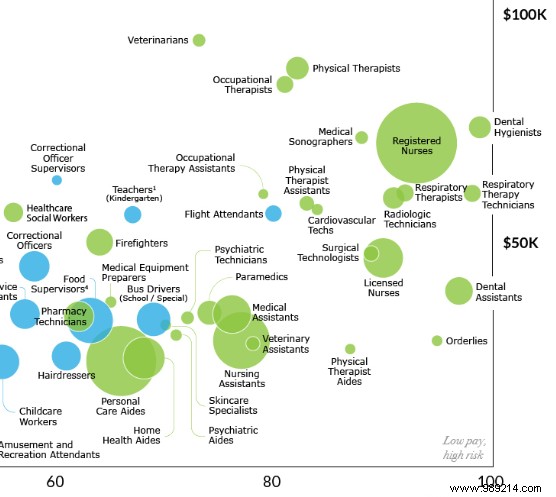
Among non-healthcare jobs, risks differ notably—for instance, teachers' exposure varies by school type, bus drivers face higher risks than taxi drivers, and airline flight attendants top the list for non-medical roles.
At the lowest risk are CEOs, economists, web developers, hardware engineers, and graphic designers—professions that typically allow remote work with minimal exposure.
