From the Antonine Plague to COVID-19, including the devastating Spanish Flu, discover the major pandemics that have profoundly shaped human history.
Infectious diseases have triggered epidemics and pandemics long before globalization. Primarily spread by viruses or bacteria, these outbreaks have caused massive demographic losses across millennia. Trade routes accelerated their propagation, but advances in virology, bacteriology, and healthcare have reduced their lethality today—though some remain significant threats.
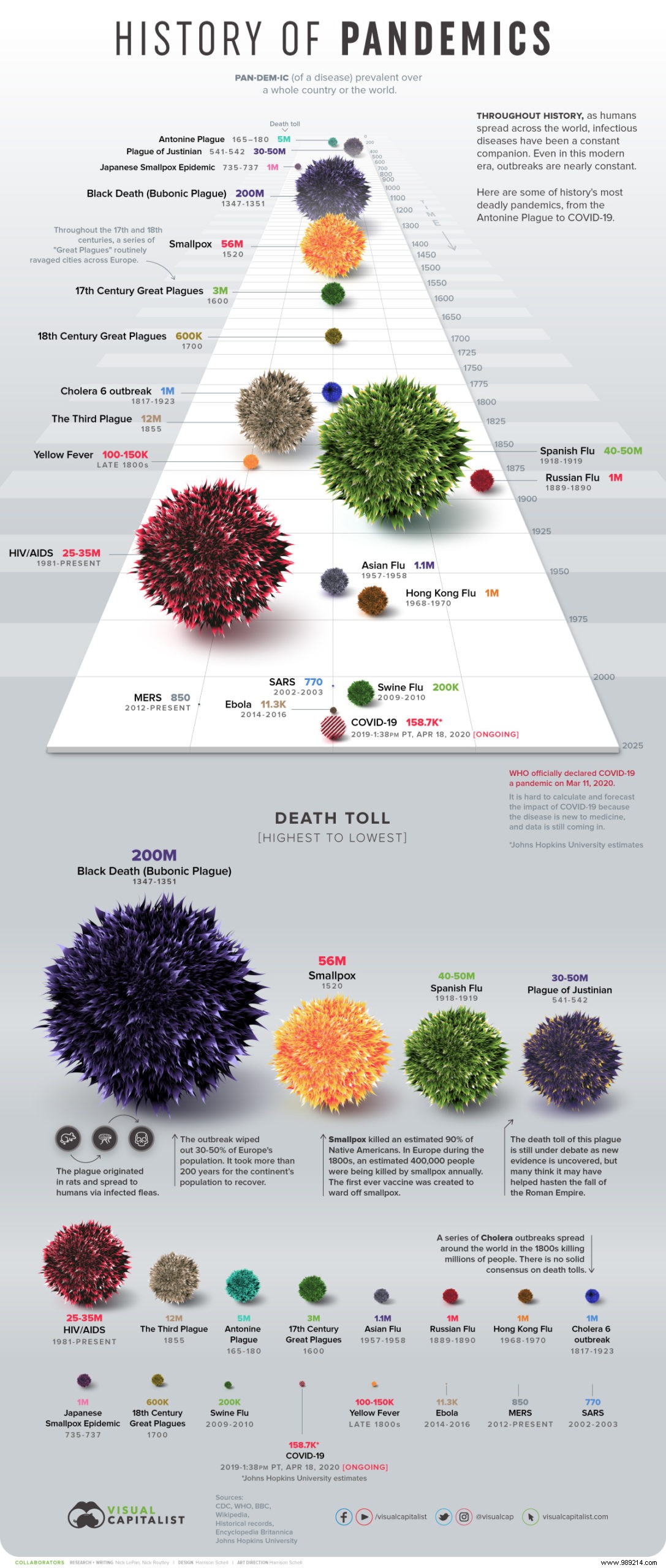
This curated list details key historical pandemics, highlighting their origins (and intermediate hosts where applicable) alongside estimated death tolls, drawn from established research:
Note: These estimates are derived from peer-reviewed research. Figures for events like the Plague of Justinian and Swine Flu remain subject to debate.

The vast majority of these pandemics stem from zoonotic diseases—pathogens jumping from animals to humans. Emerging evidence links these spillovers to human-driven environmental changes, as habitat encroachment fosters closer human-animal interactions.
Emergence hotspots cluster in regions like China and Africa, yet global trade enables rapid worldwide dissemination. COVID-19's outbreak, while unprecedented in scale, aligns with these patterns and serves as a stark reminder.
Without shifts in behavior, similar crises are inevitable. Recognizing the interplay between human activities and public health risks is essential to developing sustainable strategies that mitigate future threats.
