In Afghanistan, five innovative high school girls are developing an affordable ventilator using repurposed car parts to aid COVID-19 patients amid severe equipment shortages.
These five girls, aged 14 to 17 from Kabul and part of a robotics group, are addressing Afghanistan's dire lack of ventilators. With around 1,000 COVID-19 cases (including 33 deaths) in a nation of 35 million, the country has just 300 respirators available, exacerbated by years of war and poverty.
Leading the effort is Roya Mahboob of a local tech firm, who spoke to Arab News on April 10, 2020. The team collaborates with Afghan health experts and Harvard University specialists, building their prototype on a MIT design from Boston.
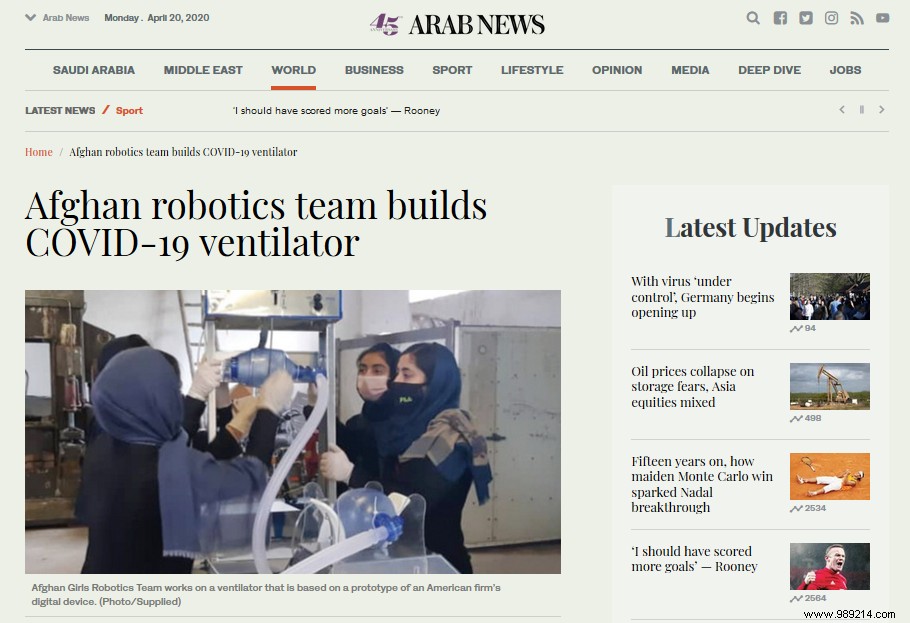
Using parts from a Toyota Corolla, including a mechanical system to operate the breathing bag, the girls have created a working prototype. Team leader Somaya Farooqi notes the biggest challenge is achieving precise timing and pumping pressure, tailored to each patient's age and condition severity.
Multiple prototypes await approval from the Afghan Ministry of Health and the World Health Organization (WHO). If successful, production can scale. Remarkably cost-effective at just 275 euros per unit—versus over 100 times more for standard models—this solution holds real promise.
Hailing from Herat in western Afghanistan, near the Iranian border, the girls respond to a surge in cases after tens of thousands of Afghan refugees returned from Iran, a COVID-19 hotspot. Local production of ventilators is a practical step forward.
