While smoking a cigarette takes just minutes, its environmental consequences linger for decades. A powerful infographic from Germany's Die Zeit (translated by Courrier International in March 2020) exposes the tobacco industry's severe pollution.
Globally, more than a billion people consume tobacco products, fueling massive industry profits. Yet, as this infographic—drawing from the World Health Organization's (WHO) 2019 Report on the Global Tobacco Epidemic—demonstrates, the environmental toll is immense. From resource-intensive production and greenhouse gas (GHG) emissions to toxic waste, the damage is profound and persistent.
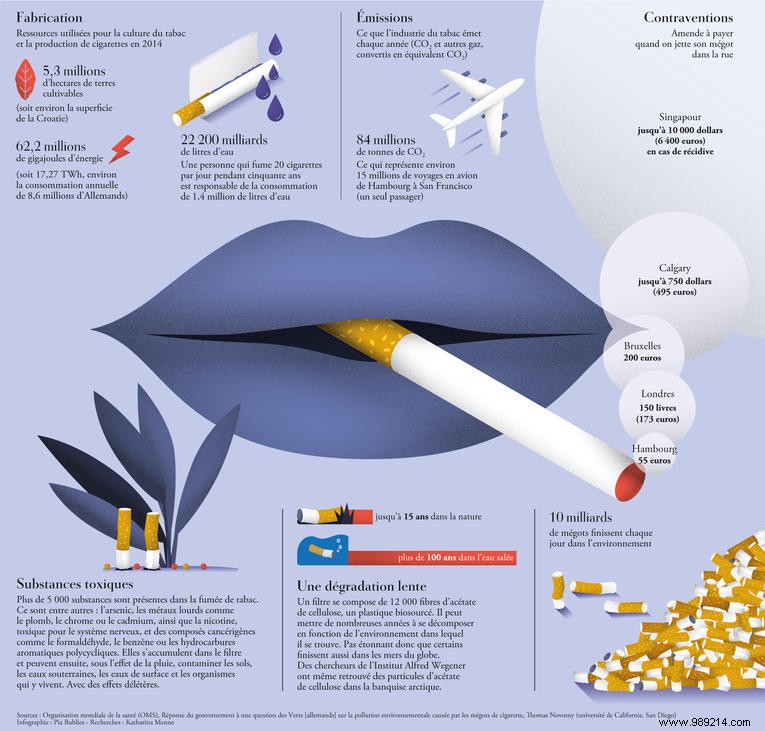
Tobacco production alone spanned 5.3 million hectares in 2014, demanding 62.2 million gigajoules of energy. For an individual smoking 20 cigarettes daily over 50 years, that's 1.4 million liters of water consumed.
The sector emits 84 million tons of CO2 annually. Cigarette butts, crafted from slow-degrading cellulose acetate, litter oceans and ecosystems worldwide.
Cigarettes harbor more than 5,000 harmful substances, including alarming toxins like arsenic and heavy metals (chromium, cadmium, lead), plus carcinogens such as benzene and formaldehyde. These severely pollute soil and surface water, compounding health and ecological crises.
Nations are cracking down: Brussels fines litterers 200 euros per butt. Singapore leads with penalties up to 6,400 euros.
In 2015, one Singaporean faced a record about 13,000 euros fine for tossing 34 butts from his window, plus five days of community service cleaning public spaces.
