April 2 is World Autism Awareness Day, spotlighting Autism Spectrum Disorder (ASD), which affects about 1 in 160 people worldwide. While genetics remain a primary factor, the surge in prevalence stems from better diagnosis and growing environmental influences.
Autism is a neurodevelopmental disorder impacting social interactions and communication lifelong. Given its wide variability, experts refer to "autism spectrum disorders." Symptoms include challenges in social engagement, communication difficulties, repetitive behaviors, resistance to change, and unique sensory responses (like to sounds or lights). Per the DSM-5, these involve persistent social deficits, restricted interests, and repetitive actions. Importantly, ASD isn't always linked to intellectual disability.
Globally, roughly 1 in 160 people have ASD. In France, INSERM estimates 700,000 cases, including 100,000 under age 20. Prevalence has climbed steadily: CDC data shows 1 in 44 U.S. 8-year-olds diagnosed in 2018, up from 1 in 250 in 2001.
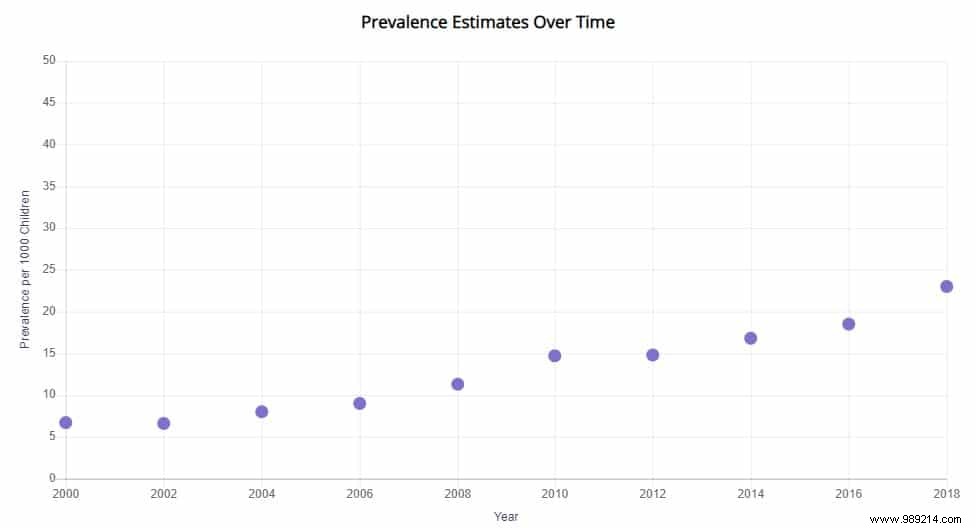
ASD causes involve gene-environment interactions, emerging prenatally before age 3. Advanced DNA sequencing has identified over 800 autism-linked genes.
"Heredity and genes explain at least 60% of autism," notes Franck Ramus, CNRS research director and associate professor, in The Conversation. Heritability of 50%, for instance, means genetics contribute 50%, with environment triggering the rest. Genetics alone can't explain rapid prevalence rises, as human DNA evolves too slowly.
"We can no longer deny environmental impacts on autistic disorders," says biologist Barbara Demeneix in Time. Studies link maternal exposure to endocrine disruptors (like certain pesticides) to higher ASD risk, alongside ADHD.
A California study (1997-2008) of 486 ASD children and 316 controls used precise pesticide records. Proximity to organophosphate spraying in late pregnancy doubled ASD odds; pyrethroids showed similar links.
In 2016, mouse neuron tests found pesticides like rotenone and fungicides altering autism-related genes. Bisphenol A (banned in France since 2015, found in plastics) is also implicated.
Air pollution contributes too: A 2014 study tied third-trimester fine particle exposure to ASD risk. Even 1-micrometer particles in early childhood raise odds by 86%, per Yuming Guo's research. Industries emit key pollutants like sulfur oxides.
Pregnant women should minimize exposure to these chemicals. Certain drugs like prenatal paracetamol may increase risk by 20%.
Better diagnostic criteria (DSM-5 broadened ASD), heightened awareness, earlier screening, and later parenthood also factor in. Yet, they don't fully account for the rise—environmental neurotoxins like endocrine disruptors and pollution bear significant responsibility, as supported by extensive research.
