As access to clean drinking water grows scarce for billions worldwide, a French startup has developed a groundbreaking solar-powered dome that converts salty or polluted water into potable supply.
According to Action contre la Faim, 2.2 billion people lacked safely managed drinking water in 2019. Additionally, 785 million had no basic service, and 144 million relied on surface water. In many regions, clean water remains critically limited.
Ongoing research drives solutions for potable water production. In 2020, MIT researchers created a solar-powered device to pull moisture from ambient air. A May 14, 2022, Designboom article highlights HelioWater, developed by a French startup and backed by Rotary International in their mission to make drinking water available to all.
"Drinking water is a rare commodity, as 20% of the world's population lacks access. One of Rotary International's strategic focuses is water supply and sanitation. Our goal? Help provide drinking water to those in need," states the HelioWater official website.
HelioWater's dome purifies non-potable water—salty or polluted—using solar energy for complete off-grid operation. It produces about 10 liters of water daily per unit. While the WHO recommends at least 20 liters per person daily, this offers a vital starting point.
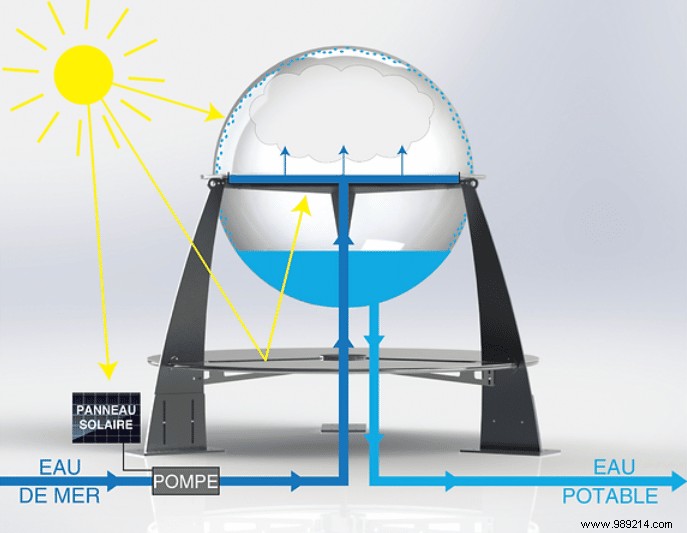
The system employs a proven distillation and mineralization process to ensure top-quality water. A specialized filter divides the dome: contaminated water is pumped from the source, heated to evaporate, condenses on the dome's walls, passes through the filter, and collects in a tank.
Built to last 30 years and withstand harsh weather, HelioWater targets remote areas like refugee camps and arid zones. In partnership with Rotary International, it's deploying in Madagascar, where 25% of under-5 child deaths stem from unsafe water.
