In Texas, health authorities are tackling a deadly brain-infecting microorganism. A young child has died, forcing Lake Jackson residents to limit tap water use amid ongoing risks.
Amid the COVID-19 pandemic, wildfires, and a heated presidential election, another crisis unfolded in the U.S., as reported by CBS News on September 28, 2020. A six-year-old girl in Texas tragically died from Naegleria fowleri, a rare but lethal "brain-eating" amoeba.
This parasite causes primary amoebic meningoencephalitis (PAM), a brain infection with a fatality rate exceeding 90%. It thrives in warm, stagnant freshwater—natural or man-made—and enters the body through the nose. The girl's family reported she played in a nearby pond and used a garden hose at their Lake Jackson home.
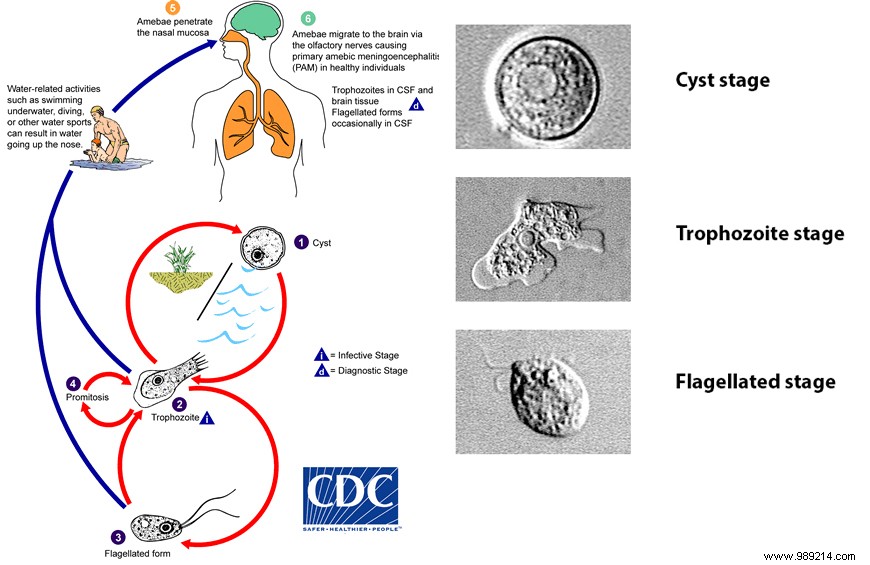
The Centers for Disease Control and Prevention (CDC) confirmed traces of the amoeba in both the pond and hose water, indicating contamination in Lake Jackson's municipal supply. Texas officials issued a do-not-use advisory for tap water across eight southeast Texas cities, including Lake Jackson.
The alert was lifted everywhere except Lake Jackson, home to 30,000 people. Residents must boil water before drinking or cooking, avoid letting children play near faucets, and prevent water from entering the nose during showers. Bottled water distributions are ongoing, with the advisory persisting until the system is thoroughly cleaned and retested.
Such infections are extremely rare in the U.S. The first case linked to tap water occurred in Louisiana in 2011. Over the past decade, only 34 infections have been recorded nationwide, though Naegleria fowleri is more common in tropical, subtropical regions, and Oceania.
