Australian researchers from the University of New South Wales have developed a groundbreaking 3D printing technique that fabricates bone structures directly inside patients' bodies using a novel ceramic ink infused with living cells.
3D printing has already transformed medicine, notably enabling the world's first double hand and face transplant. In a study published in Advanced Functional Materials, UNSW experts introduced a biocompatible ceramic ink that integrates living cells into printed bone scaffolds. These cells remain viable at 95% and continue multiplying for weeks post-printing.
Traditional bone 3D printing relied on synthetic materials or implants that required surgical introduction. This innovation allows precise in situ printing within the body, bypassing harsh chemicals and foreign materials.
"It could be used in clinical applications where there is a high demand for in situ repair of bone defects such as those caused by trauma, cancer or when a large piece of tissue is resected," states the university's press release.
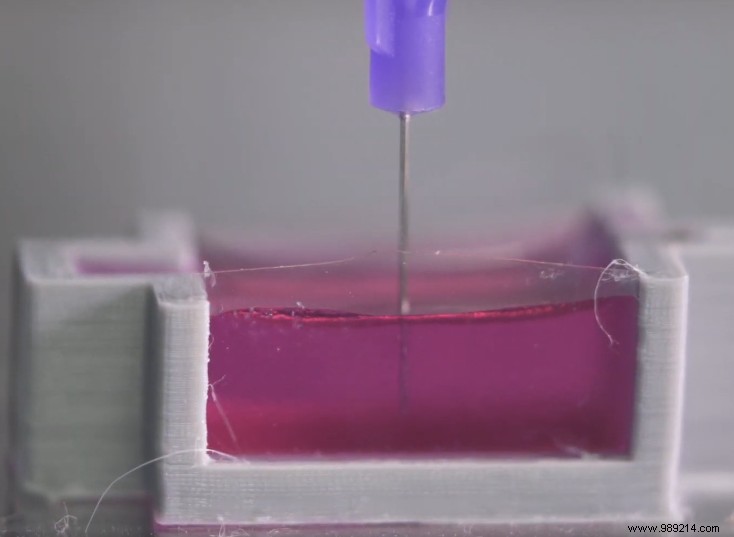
As demonstrated in the accompanying video, project lead Kris Kilian highlights how this technique streamlines surgeries, reduces patient pain, and minimizes risks. Conventional autologous bone grafts involve harvesting bone from another body site, which is invasive and carries infection risks.
The ink, a room-temperature paste of biocompatible calcium phosphate, solidifies into a porous, nanocrystalline matrix mimicking natural bone upon contact with a gelatin bath. This advancement, backed by rigorous research, promises to revolutionize 3D bioprinting in orthopedics.
Watch the University of New South Wales video below for a detailed demonstration.
