As COVID-19 cases ease in Europe amid warmer weather, a pivotal study from U.S. researchers underscores the virus's seasonal nature. Published June 11, 2020, in JAMA Network Open, University of Virginia experts predict potential winter surges in temperate northern hemisphere countries.
SARS-CoV-2 transmits more readily in dry, cooler environments. The analysis pinpoints major outbreaks in cities within a 30° to 50° north latitude band (see map below), including Wuhan (China), Tokyo (Japan), Daegu (South Korea), Qom (Iran), Milan (Italy), Paris (France), Seattle and Washington (United States), and Madrid (Spain).
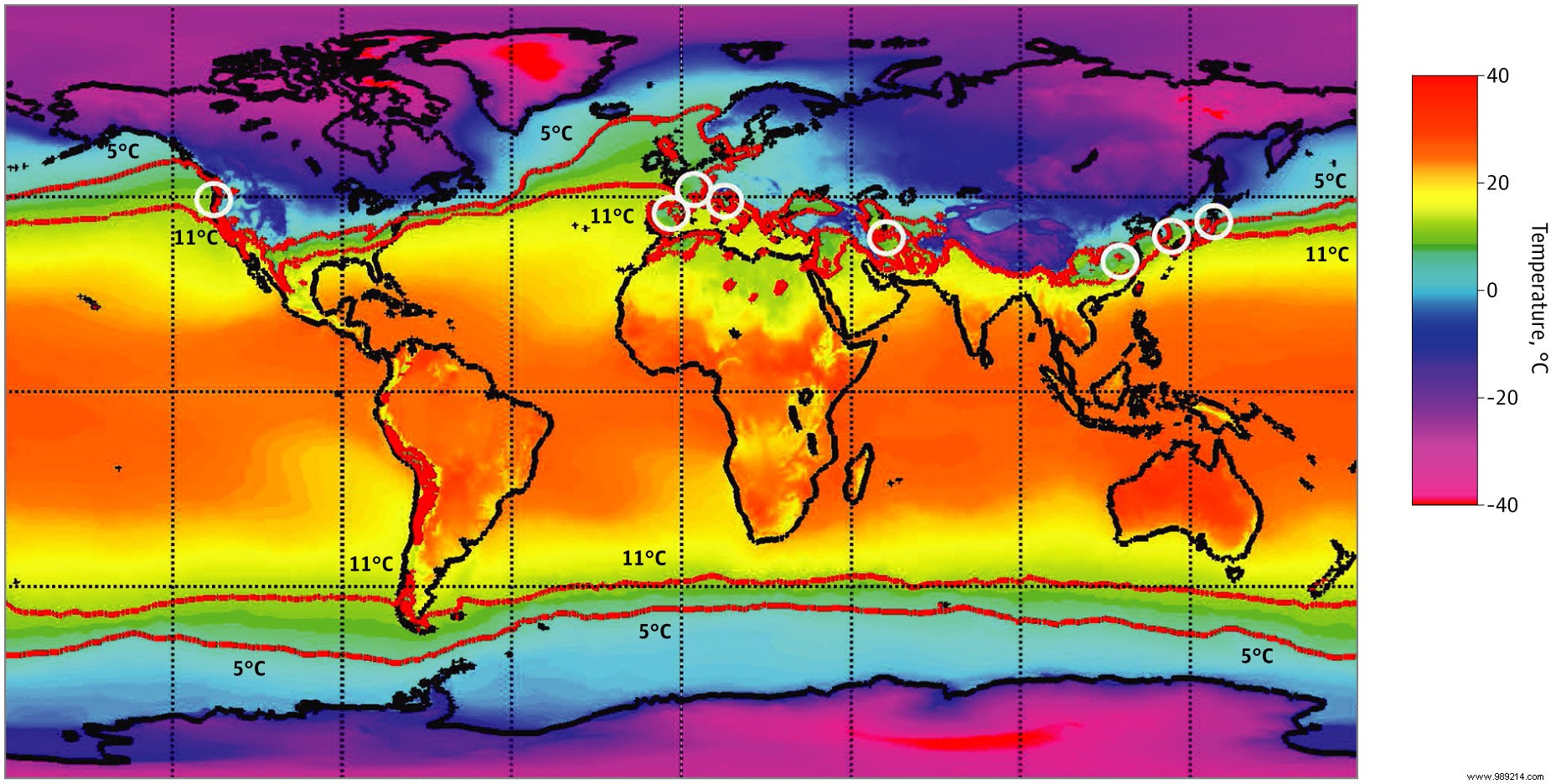
"The distribution of major COVID-19 outbreaks by latitude, temperature, and humidity aligned with patterns of seasonal respiratory viruses," the study states.
Affected cities saw temperatures of 5–10.5°C and relative humidity of 44–84% during peak spread. Notably, 42 other cities sidestepped severe outbreaks, lying outside this latitude zone.
Common cold-causing coronaviruses show pronounced winter seasonality, vanishing in summer. COVID-19 may mirror this, much like influenza, which peaks December–April in the northern hemisphere and June–September in the south. Tropical areas see multiple waves sans winter.
The researchers anticipate COVID-19 following suit. While aggressive public health measures eradicated SARS in 2003 from tropics and the south, escalating global cases dim this prospect. Tracking in New Zealand, Argentina, Chile, and South Africa can guide northern preparedness.
