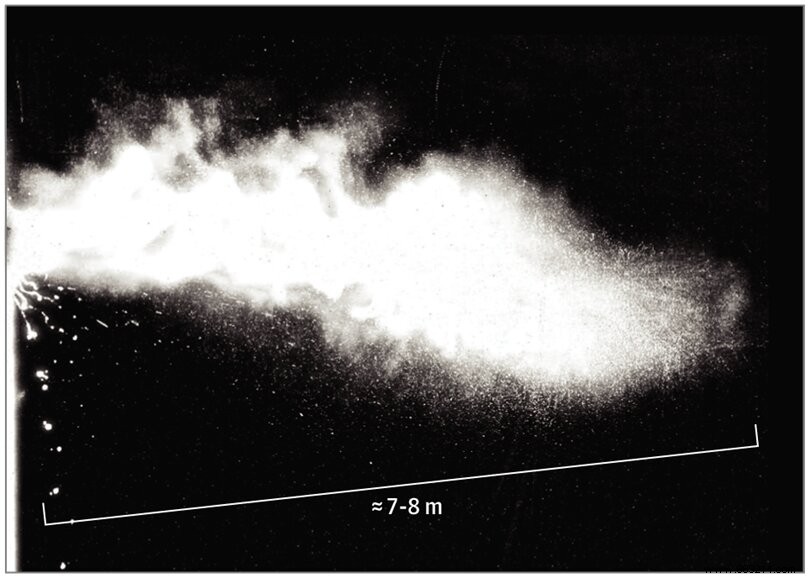
MIT researcher Lydia Bourouiba reveals that SARS-CoV-2 droplets from coughs or sneezes can travel in a gas cloud up to 8.2 meters, exceeding standard safety guidelines.
It's well-established that SARS-CoV-2 spreads via respiratory droplets through close contact. Health authorities recommend 1-2 meter distancing to reduce transmission risks. But is this sufficient?
Lydia Bourouiba, an MIT professor specializing in exhalation dynamics like coughing and sneezing, has found that violent exhalations propel droplets in a cloud up to 8.2 meters.
This suggests SARS-CoV-2 could transmit well beyond current safety distances.
Dr. Paul Pottinger, Professor of Infectious Diseases at the University of Washington School of Medicine, notes the key question isn't just distance traveled, but "how far they remain infectious." Smaller particles pose lower risk upon inhalation, while larger droplets—the biggest coronavirus threat—typically fall within two meters, aligning with WHO's two-meter guideline.
Bourouiba's study emphasizes that a "gas cloud" carries droplets of all sizes from coughs or sneezes.
While conducted on other coronaviruses, Bourouiba advocates precautionary measures for "more stringent" policies, especially for frontline healthcare workers facing potentially underestimated exposure.
The WHO is monitoring emerging evidence and will update guidelines as new data emerges.
Source
