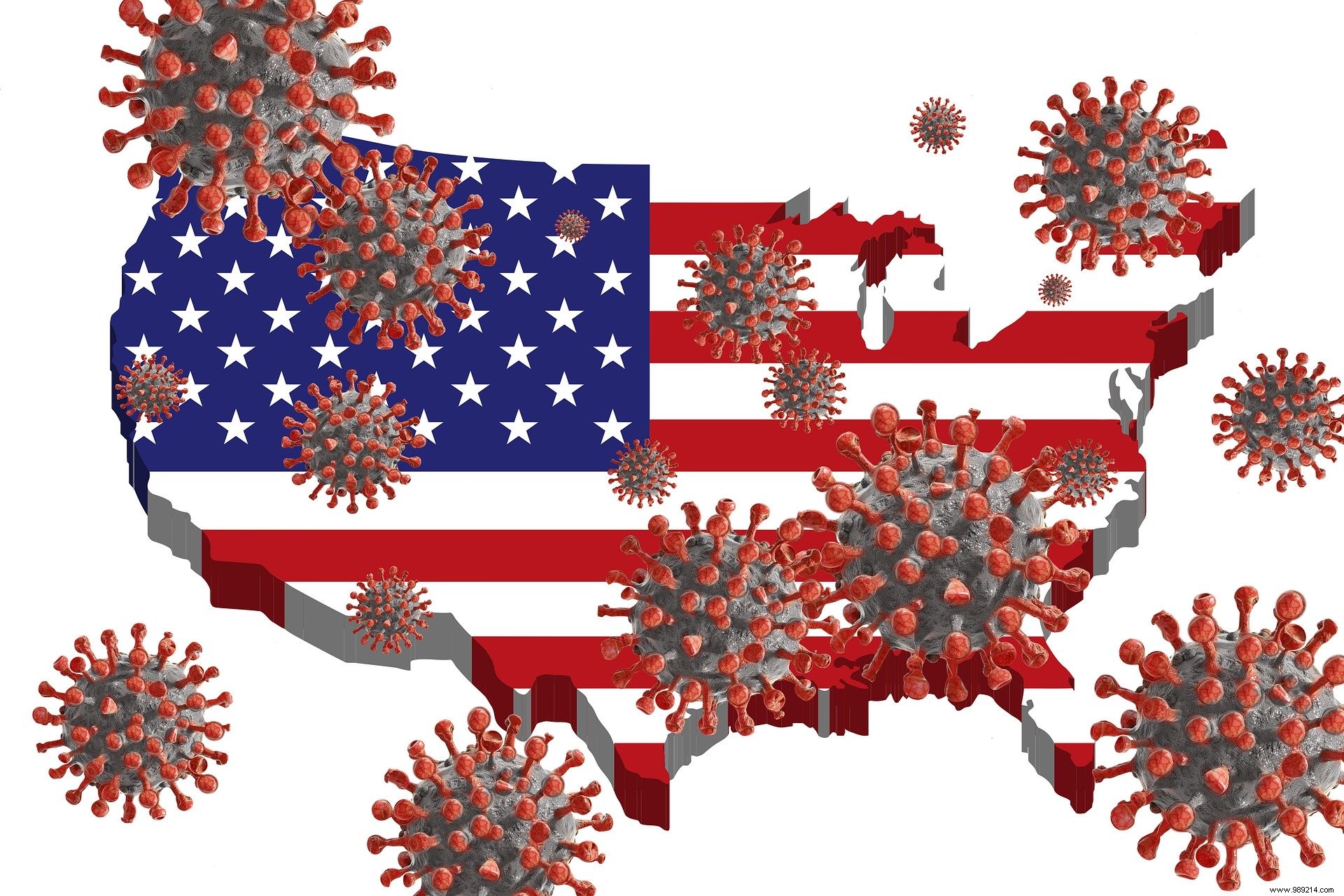
U.S. President Donald Trump recently stated that the COVID-19 pandemic could claim between 100,000 and 200,000 lives in the United States.
As of April 1, Johns Hopkins University data recorded over 870,000 COVID-19 cases worldwide and more than 43,000 deaths. The U.S. reported over 190,000 cases and 4,000 deaths, rapidly becoming the pandemic's new epicenter ahead of China and Italy. New York City, with more than 70,000 cases, is viewed by specialists as a ticking time bomb.
The situation shows no signs of immediate improvement. White House experts led by Dr. Anthony Fauci analyzed statistical models from New York and global trends, projecting 100,000 to 200,000 deaths in the U.S. under the best-case scenario. Deaths are expected to peak within the next two weeks.
President Trump announced this during a Tuesday press conference: "It's going to be a very painful, very very painful two weeks."
Coronavirus advisor Dr. Deborah Birx warned on NBC that "no state will be spared," urging every metropolis to prepare for a New York-scale crisis and act now to prevent it.
New hotspots are emerging nationwide, including New Jersey, Florida, and Louisiana.
Independent researchers validate the White House models. Bill Hanage, associate professor of epidemiology at Harvard T.H. Chan School of Public Health, deemed the 100,000–200,000 death estimate "reasonable."
These are not set-in-stone predictions. Caitlin Rivers of Johns Hopkins Center for Health Security told Vox: "Unlike the weather, here we have the power to influence the outcome." She noted that actions like enforcing social distancing and strengthening health systems in the coming weeks could markedly improve outcomes.
Source
