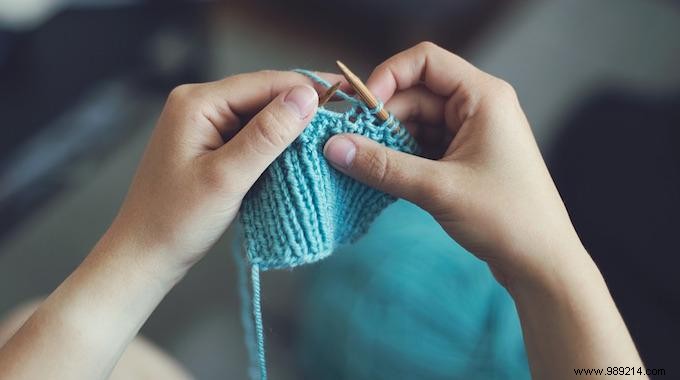
Learning to knit might not top your to-do list, but it absolutely should. Far from being just for grandmothers, this timeless craft delivers surprising health benefits—and you'll end up with cozy, handmade treasures like scarves or blankets to wear, snuggle in, or gift.
Best of all, modern yarns are incredibly soft, banishing those itchy options of the past.

With fewer people knitting today, unveiling your creation feels like performing magic. Crafting by hand is inherently rewarding—even an imperfect scarf fills you with pride, knowing you made it from start to finish.
Master the basics, and knitting turns meditative. Repetitive stitches engage muscle memory, freeing your mind to unwind. This rhythmic practice delivers meditation-like relaxation for body and mind—plus a finished project!
To discover: Meditation: The 7 Scientifically Proven Benefits to Your Brain.
Rhythmic movements and focused attention shift your mind from worries, quickly lowering heart rate and blood pressure. When anxiety strikes, grab your needles for natural relief.
Knitting lights up the entire brain: the frontal lobe (reward, attention, planning), parietal lobe (sensory and spatial processing), occipital lobe (visual data), temporal lobe (memory, language), and cerebellum (precise movements).
Therapists even recommend it for Parkinson's patients, enhancing motor function and distracting from pain.
By honing motor skills and uplifting mood, knitting keeps your brain agile. Recent studies show older adults who knit face 30-50% lower risk of mild cognitive impairment compared to non-crafters.
Gentle finger movements lubricate joints, strengthening cartilage without strain—unlike keyboard typing. For those with arthritis, soak hands in warm water first.
Knitting profoundly supports mental and physical health. Visit your local yarn shop for soft wool, needles, and beginner classes—many are free or low-cost. Or try YouTube tutorials; that's how I got started. Once hooked, you'll knit at home, on trains, or vacations!
