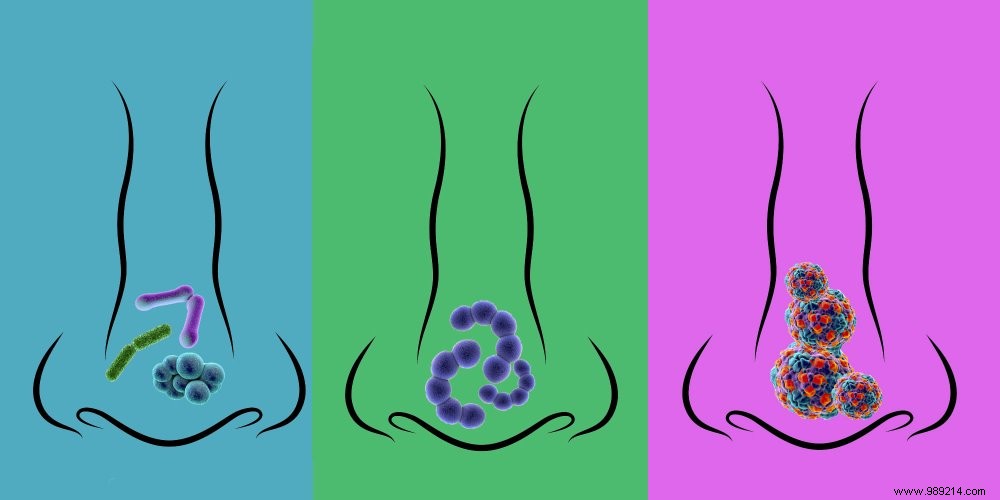
 Our nasal cavities, much like the gut or vaginal microbiomes, host a diverse community of microbes that defend against viruses and harmful bacteria. This microbial ecosystem serves as our first line of defense against respiratory infections.
 By now, the critical role of the gut microbiota in supporting immune function and overall health is well-established. A balanced, diverse gut microbiome enhances our resistance to infections. We've also learned about the skin, oral, and vaginal microbiomes, each vital for their respective barriers against pathogens.
Recent research has spotlighted the nasal microbiota—a unique microbial community on the mucous membranes lining our nasal passages. Maintaining its balance helps prevent and mitigate colds, nasopharyngitis, and even COVID-19.
"The nasal microbiota encompasses all microorganisms—bacteria, viruses, and yeasts—residing on the nasal mucosa from front to back," explains Prof. Geneviève Héry Arnaud, microbiologist at Brest University Hospital. It features over 30 bacterial families, some shared with the gut or skin, others nose-specific like Moraxella and Hungatella.
This ecosystem evolves with age. Newborns have abundant Staphylococci and Corynebacteria, which decline over months, allowing Moraxella to dominate, per a 2020 U.S. study in Pediatrics. Children aged 1-2 with low Moraxella levels face higher asthma risk.
Video of the day:"Nasal microbiota bacteria create a barrier against influenza (influenzae) and common cold rhinoviruses," notes Prof. Geneviève Héry Arnaud. They also combat antibiotic-resistant Staphylococcus aureus through competition, preventing nasal colonization.
A University of Antwerp study compared nasal microbiomes of healthy individuals and those with recurrent upper respiratory infections. Healthy noses showed three times more Lactobacillus casei overall and ten times more at the nasopharynx than in those with inflammation or chronic sinusitis. Higher Lactobacillus gasseri correlated with reduced Streptococcus susceptibility.
These insights are transforming nasopharyngitis treatment. New microbiome-balancing products like France's Azeol nasal spray and ProbioRinse (Canada/U.S.) enhance natural defenses.
The nose is a primary SARS-CoV-2 entry point. A robust nasal microbiota limits symptoms by curbing viral load, while a depleted one worsens outcomes, according to University of Augusta researchers analyzing COVID-19 patients' microbiomes. Larger studies are needed to validate this for prognosis or microbiota-based therapies.
Read also: