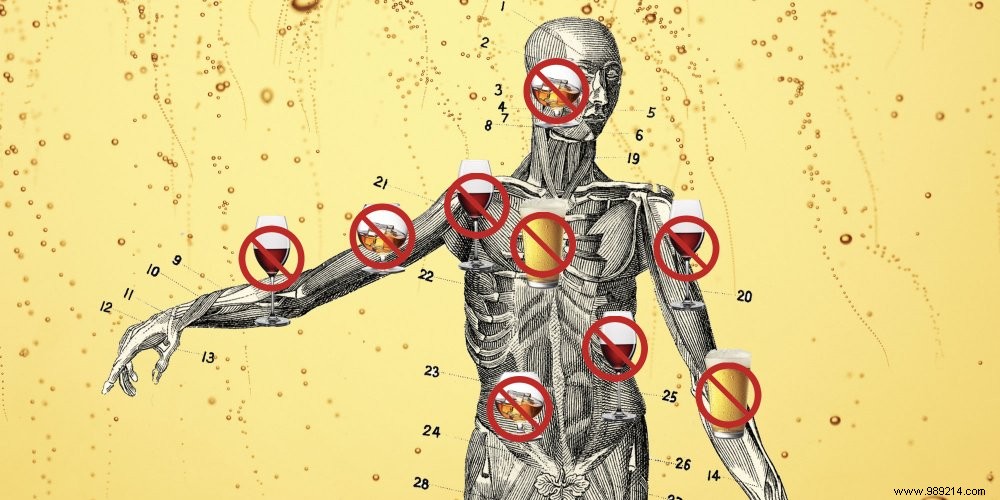
 Quitting alcohol tops New Year's resolutions annually. Even short-term abstinence delivers profound health benefits, as confirmed by experts like Dr. Cyril Gauthier, nutritionist and member of the Scientific College of the Ramsay Health Foundation.
 "Our body is not designed to metabolize alcohol," notes Dr. Gauthier. The liquid calories from wine, gin, or vodka bypass efficient energy use and head straight to the liver, converting into toxic byproducts and fats. Alcohol also disrupts sleep and other vital functions.
Stopping leads to a rapid health upgrade and enhanced well-being.
For regular heavy drinkers, quitting triggers withdrawal symptoms that temporarily mask benefits, varying by dependence severity.
The brain, deprived of alcohol, reduces dopamine and serotonin—key neurotransmitters for pleasure and mood—causing irritability, anxiety, and short-term depression.
Insomnia, nausea, tremors, and profound fatigue often peak in the first 24-48 hours but typically resolve within 7-10 days of abstinence.
For severe dependence, professional support eases the process and lowers relapse risk.
Abstinence shifts the body into detox mode, allowing the liver to recover.
After weeks without excess, it clears stored fats, reducing hepatic steatosis and risks of fibrosis and cirrhosis, per Dr. Gauthier. A one-month break, like Dry January, offers gains—permanent abstinence is ideal.
Without replacing alcohol with sodas or sweets, expect quick weight loss, especially abdominal. One gram of alcohol packs 7.1 kcal—more than sugar's 4 kcal—slashing type 2 diabetes and cardiovascular risks.
Cancer risk also drops progressively (source: Ligue contre le Cancer). "Even one daily drink raises risks for digestive (intestines, stomach, esophagus), throat, mouth, and breast cancers," Dr. Gauthier explains.
Processing alcohol exhausts the body; quitting swiftly cuts fatigue. By two weeks, sleep improves markedly.
Falling asleep isn't quicker without alcohol's sedative haze, but nighttime awakenings decrease, and deep sleep enhances quality.
This boosts physical recovery, strengthens immunity, and sharpens brain functions like reasoning, focus, and decision-making.
After a month, skin regains radiance: alcohol's diuretic effect dries tissues, but hydration restores elasticity, fades redness, and evens complexion.
*Alcohol Info Service
