While most people understand climate change, carbon emissions, CO2, air pollution, and water scarcity, soil health remains largely overlooked—a critical gap the Save Soil Movement is working to close.
The U.S.-based nonprofit Save Soil Movement, backed by the United Nations and numerous partners, focuses on raising awareness about soil degradation. It pursues three key objectives:
– Urging humanity to prioritize soils, whose decline is accelerating.
– Inspiring 3.5 billion people—60% of the global electorate—to advocate for policies that protect, nurture, and sustain soils.
– Driving national policy changes in at least 193 countries to maintain soil organic content at a minimum of 3-6%.
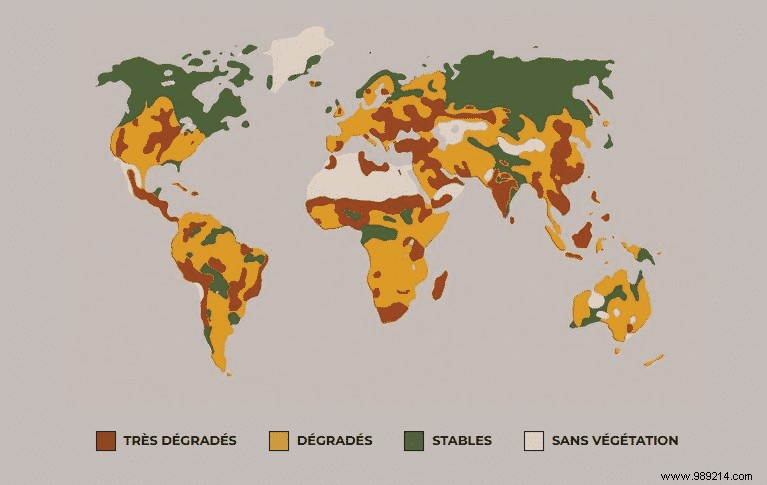
The movement's soil health map (below) reveals that the majority of global soils are either degraded or severely degraded, affecting every continent.
Save Soil's website features an interactive quiz highlighting soil's foundational role. Key insights include: soils consist of sand and organic matter; 87% of life on Earth depends on them; they store three times more carbon than plants; they hold about 65% of freshwater; soil microbes filter pollutants for cleaner air; and 95% of our food comes from productive farmlands.
Recent events like the Ukraine conflict underscore soil depletion. Ukraine's renowned chernozems (black earth), with humus levels of 3-15%, are among the world's most fertile. Yet even these are degrading, primarily due to declining organic matter.
