Brazilian researchers at the University of Bahia are investigating caiman tears for medical applications. Remarkably similar to human tears in composition, they show potential to effectively treat eye conditions like dry eye syndrome.
Caimans (Caimaninae), close relatives of alligators in the Alligatoridae family, are renowned for their powerful jaws and sharp teeth. Now, their tears are gaining attention for their unique properties. Led by Arianne Pontes Oriá, a team from the University of Bahia published initial findings in Frontiers in Veterinary Science on August 13, 2020. They analyzed tears from various animals to assess their medical potential, with caiman tears emerging as particularly promising.
Human eyes blink about 15 times per minute to spread tears across the cornea for lubrication. In contrast, caimans can go up to two hours without blinking or rewetting. At the microscopic level, their tears form very thick lattices, unlike those in many other species.
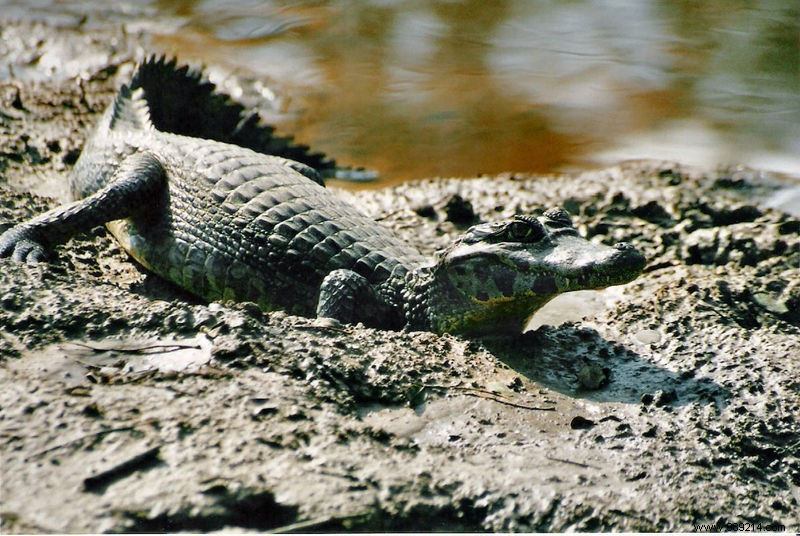
These properties could address key ophthalmic issues in humans, such as chronic dry eye. The researchers are also examining tears from other reptiles like turtles and birds including owls and hawks.
Gathering animal tears is a complex process, requiring the animal to relax before gently collecting fluid with a paper towel. Patience is essential due to limited volumes. Most animals produce only basal tears for lubrication or reflex tears for cleaning—emotional tears, like those in humans, are absent.
The team remains at the hypothesis stage for clinical applications but sees strong potential in caiman tears. This work highlights how evolution has shaped diverse tear properties in response to environmental challenges.
