We've all woken up after a night of partying feeling the wrath of a hangover. Nausea, pounding headaches, and stomach pain—medically known as "veisalgia"—can ruin your day. The surefire way to avoid them? Moderation in alcohol consumption. But if you overindulge, can science help mitigate the misery? What happens in your body during excess drinking, and is a "miracle" pill on the horizon?
A hangover is essentially acute alcohol poisoning. The term "veisalgia" derives from Norwegian kveis (uneasiness after debauchery) and Greek algia (pain). It stems from multiple interconnected causes, varying by individual factors like genetics, environment, and timing. Despite alcohol's long history, hangover research only gained traction in the 2000s, leaving many mechanisms poorly understood.
Hangover symptoms peak when blood alcohol levels hit zero, long after intoxication fades. No single explanation covers it all; alcohol assaults nearly every organ, triggering defensive responses.
Dehydration is a primary culprit. Alcohol acts as a diuretic, with Harvard research noting that four drinks can cause nearly a liter of fluid loss. The body pulls water from organs like the brain, leading to temporary shrinkage and meningeal contraction—hence the headache. Electrolyte imbalances contribute to cramps and muscle aches.
Sleep disruption plays a role too. The National Institute on Alcohol Abuse and Alcoholism (NIAAA) explains that while alcohol induces drowsiness, it fragments sleep, reducing depth and causing frequent awakenings. This leads to fatigue, poor coordination, and brain fog.
Hypoglycemia from dehydration occurs but isn't the full story—glucose alone doesn't cure hangovers, per studies. Inflammation may factor in, with Korean researchers detecting elevated cytokines, signaling immune overdrive. Yet anti-inflammatories like ibuprofen don't fully resolve symptoms.
In short, hangovers result from a perfect storm of dehydration, sleep loss, metabolic shifts, and inflammation.
To minimize symptoms, avoid mixing drinks and opt for clearer spirits like white wine, lager, or gin over dark ones.
A 2010 study compared bourbon and vodka in nearly 100 young adults. Bourbon led to worse hangovers due to congeners—fermentation byproducts like methanol, polyphenols, and tannins that slow alcohol breakdown and add toxicity. Bourbon has 37 times more than vodka; they're abundant in whiskies and cognacs.
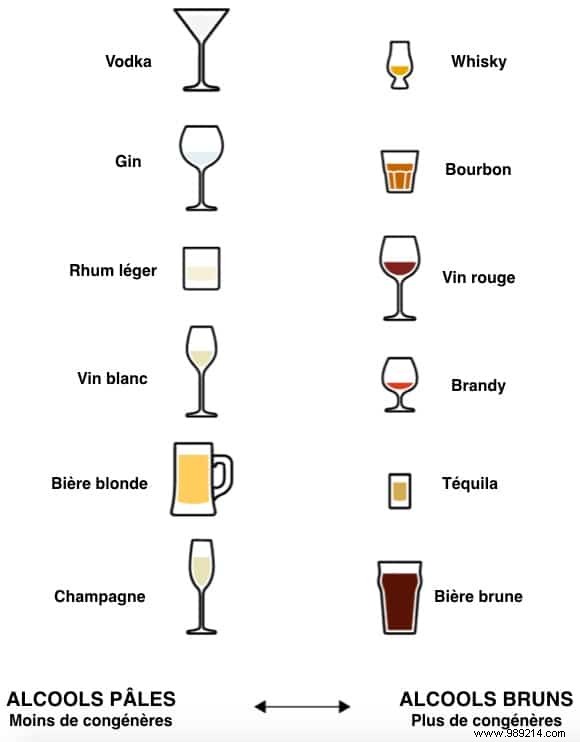
It's not mixing per se, but congener content. Stick to low-congener options on wild nights.
Ethanol absorbs rapidly via the gut, hitting the liver where alcohol dehydrogenase (ADH) converts it to byproducts. At peak, the liver clears ~35ml pure alcohol hourly (one beer, wine, or 50ml vodka).
Avoid fatty foods that burden it further. "Hair of the dog" worsens the cycle, risking addiction. Breakdown products inflame the liver, potentially leading to fatty liver, hepatitis, or cirrhosis.
Alcohol also causes acidosis, disrupting pH balance—skip acidic foods/drinks.
The anti-hangover market tops $1 billion annually, but few remedies are clinically proven. No preventive cure exists yet, but promising research emerges.
Finnish 2020 study: Double-blind trial on 19 men tested L-cysteine (600mg or 1200mg) post-drinking. The higher dose cut nausea/headaches; lower eased anxiety/stress by neutralizing acetone, an ethanol byproduct. (Funded by a cysteine seller; more studies needed.)
German study: 214 adults tested a vitamin-mineral-herb mix (acerola, prickly pear, ginkgo, willow, ginger; plus magnesium, potassium, etc.). It reduced headaches 34% and nausea 42% vs. placebo. Vitamins/minerals alone? No effect, questioning electrolyte myths.
Chinese kudzu root: Its puerarin calms the nervous system, easing headaches/stress. Harvard's 2012 study showed it slowed drinking pace and volume, aiding moderation.
Folklore remedies and IV drips lack evidence—a 2005 review debunked most.
Paracetamol (acetaminophen) + alcohol risks liver strain. Both use CYP2E1 enzyme, producing toxic NAPQI that glutathione normally clears. Excess alcohol depletes it, risking damage. Opt for ibuprofen instead—anti-inflammatory without liver overload.
Best hangover strategy: Rest, hydrate, recover. Moderation reigns supreme—no miracle pill yet. "Hangover-free" drinks like Sentia (plant-based buzz mimic) are pricey novelties or hype.
