Not consuming enough fruits and vegetables can lead to serious health risks, including obesity and macular degeneration. Even with easy access, many people resist these nutrient-rich foods. Researchers at the University of Georgia delved into the psychology behind vegetable presentation and serving styles to uncover what drives consumption.
Prior studies show that individually packaging appealing foods like chocolates in smaller portions reduces intake by heightening awareness of quantity consumed.
"For chocolates, people must inhibit the urge to eat more. Each decision point prompts them to stop, so more decision points actually curb consumption," explained the study's lead author.
Yet, for less enticing options like vegetables and other low-fat, low-sugar foods, serving them in individual units may yield the opposite result—increasing consumption.
"People need to exert self-control to eat vegetables. Additional decision points could demand more effort to start. Portioning into units simplifies choices, while our innate drive for completion encourages finishing even less appealing servings," the researchers noted.
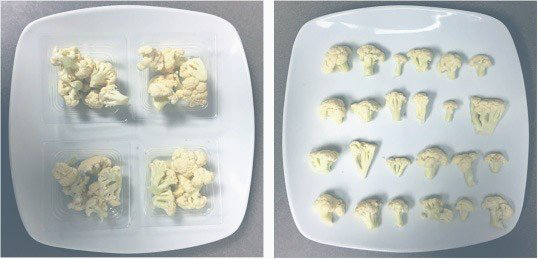
In controlled experiments, the team presented cauliflower either as a whole pile on one plate or in partitioned individual units, then tracked consumption. Overall intake was similar across groups, but presentation mattered. In the whole format, most ate just one piece. In partitioned setups, participants were far less likely to stop at one and more inclined to finish a full serving (four or six pieces, depending on the trial).
