Chinese researchers have pioneered an AI system that monitors mouse embryo development in an artificial womb, adjusting vital factors like CO2 and nutrient levels in real time for optimal growth. Could this technology one day enable human births outside the body?
Researchers worldwide are advancing artificial wombs to boost survival rates for extremely premature infants. In 2017, a team at Children's Hospital of Philadelphia successfully developed lamb fetuses for a month in a transparent biobag connected to blood and physiological support systems, with no apparent long-term effects.
Beyond rescuing babies born before 24 weeks, these innovations could spare women the physical and psychological trauma of childbirth, including muscle tears, incontinence, pelvic fractures, PTSD, and postpartum depression.
While ethical debates loom large, the urgent need drives progress. Chinese scientists are at the forefront.
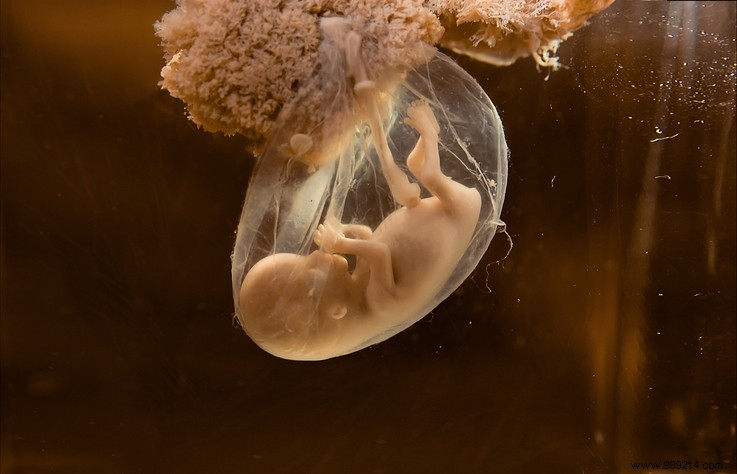
In 2019, separate teams cultured primate embryos for up to 20 days, challenging the international 14-day limit on human embryo research.
Scientists at the Suzhou Institute of Biomedical Engineering and Technology have now created an AI that tracks embryos as they develop into fetuses, fine-tuning parameters like nutrient delivery in real time. Their artificial uterus sustained multiple mouse embryos in nutrient-rich, cube-shaped chambers.
The system captures high-resolution images at varying depths during critical stages, offering unprecedented insights into early human embryo maturation. "This will not only deepen our understanding of life's origins and human embryonic development but also lay the groundwork for addressing birth defects and reproductive health challenges," the researchers state. Human embryo studies remain restricted beyond 14 days under global regulations.
Findings appear in the Journal of Biomedical Engineering.
