A novel Lyme disease vaccine candidate has demonstrated strong efficacy in mouse and guinea pig models, with potential to translate to humans. Findings are detailed in Science Translational Medicine.
Blacklegged ticks (Ixodes scapularis) transmit the bacterium Borrelia burgdorferi, the primary cause of Lyme disease. In France, annual cases ranged from 25,000 to 68,000 between 2009 and 2019. While many infections are asymptomatic, severe cases can lead to debilitating symptoms like chronic joint pain or partial limb paralysis.
Current treatments rely on antibiotics for neurological issues, often combined with corticosteroids. Researchers are now targeting prevention by disrupting tick feeding early.
Certain animals, such as rabbits, acquire natural resistance to tick bites after repeated exposures. This triggers an inflamed red welt at the bite site, hindering the tick's blood meal. Ticks typically detach prematurely as a result.
Lyme bacteria transmission usually requires the tick to remain attached for over 48 hours. To feed undetected, ticks secrete saliva proteins that dampen the host's immune response, minimizing pain and inflammation.
In resistant hosts, this immune reaction causes ticks to detach before pathogens transfer, offering a blueprint for vaccination.
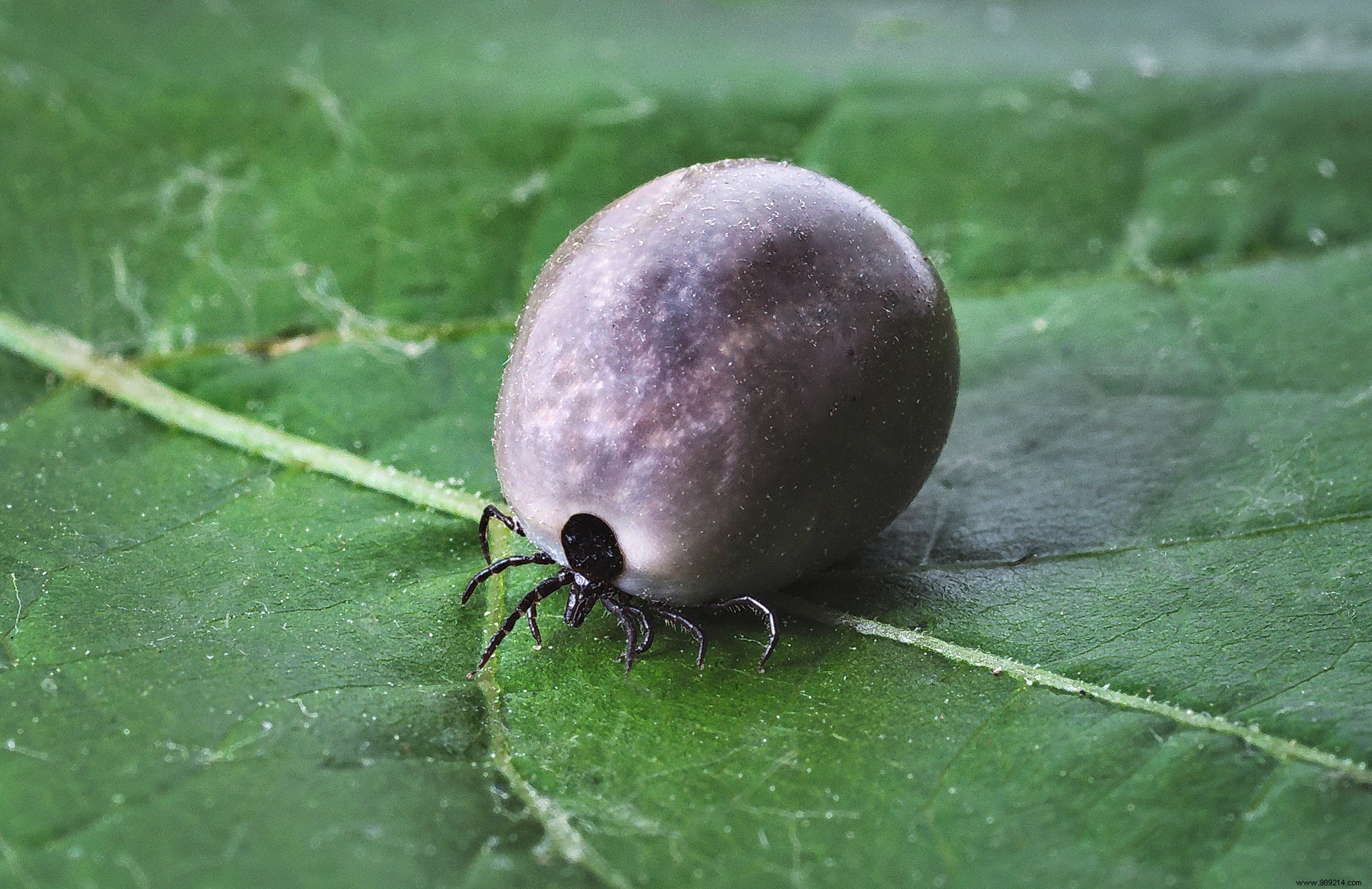
Scientists at the Czech Academy of Sciences' Institute of Parasitology developed an mRNA vaccine to elicit a targeted immune response against key tick saliva proteins.
They isolated 19 saliva proteins—some suppress immunity, others promote blood flow and prevent clotting. mRNA encoding these proteins was encapsulated in lipid nanoparticles and injected into guinea pigs.
Two weeks post-vaccination, blood analysis revealed antibodies against 10 of the 19 proteins.
When uninfected ticks were applied, vaccinated animals showed substantial redness at bite sites within 18 hours, unlike minimal reactions in controls. Ticks on vaccinated hosts fed poorly and detached within 48 hours; by 96 hours, over 80% had detached, compared to just 20% on unvaccinated animals.
To assess transmission prevention, researchers exposed animals to three infected ticks each, removing them upon redness development—mimicking human behavior.
Post-exposure, six of 13 unvaccinated guinea pigs tested positive for B. burgdorferi, while none of the vaccinated group did.
Though early-stage, the researchers anticipate similar efficacy in humans, as neither species plays a key role in the bacterium's natural cycle.
