A groundbreaking British study uncovers a startling link: negative body perception may arise from poor brain connections to internal organs. Those overly focused on weight show diminished brain responses to gut signals.
Psychologists have long explored body perception, but neuroscientists like Jane Aspell from Anglia Ruskin University (UK) are now delving deeper. In her study published in the journal Cortex on September 2, 2021, Aspell highlights how disrupted electrical signals between the gut, heart, and brain alter body perception.
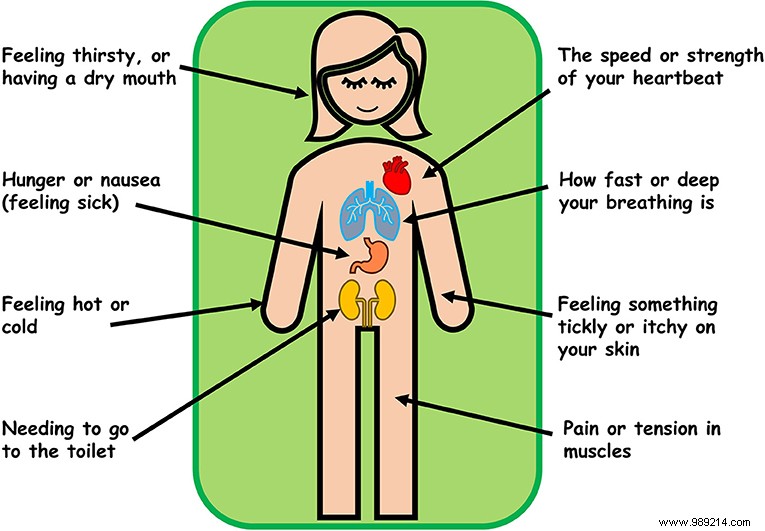
Aspell explains that "body experience" comprises external awareness (limbs, skin) and internal interoception (heartbeats, hunger). Yet, people often overlook the constant, subconscious exchanges between organs.
Her research shows that weak reception of gut and heart signals to the brain can negatively impact body image, disrupting interoception (see diagram below).
Aspell’s team tested healthy adults, assessing their body image, weight concerns, and shame levels. They measured brain-gut and brain-heart electrical activity.
Findings revealed that weaker brain responses to gut signals correlated with higher body shame and weight preoccupation. With abnormal interoception, the brain overemphasizes physical appearance and weight due to poor "internal body" connections.
These insights could help those with negative body image, which profoundly affects daily life. Early detection might prevent issues, potentially aiding the 900,000 French individuals with eating disorders.
