Since the COVID-19 pandemic began, protective masks have been essential tools in curbing transmission. A recent Florida Atlantic University study, published in Physics of Fluids on June 30, 2020, compared shapes and materials to pinpoint the best configurations for limiting viral droplets during sneezes and coughs.
Masks are our frontline defense against coronavirus spread. While medical-grade options have been well-studied, evidence on homemade masks was limited. This research visualized droplet propagation—the primary transmission route for SARS-CoV-2—through various masks. Researchers simulated sneezes and coughs using a dummy and captured laser-illuminated particle images for precise analysis.
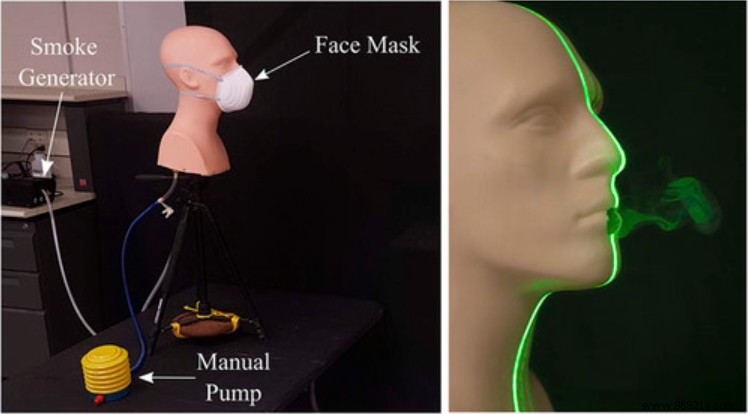
The study tested homemade masks, a non-sterile conical pharmacy mask, and a bandana. Bandanas and double-folded cloth handkerchiefs provided inadequate protection. However, the conical mask and a two-layer tight-woven cotton homemade mask excelled.
Key findings on droplet travel distances: Unmasked sneezes reach 2.5 meters; bandanas, 1.1 meters; basic fabric masks, 38 cm (still risky). Conical pharmacy masks limit projections to 20 cm, while the tight cotton mask reduces them to just 6 cm—the top performer.
These results, drawn from rigorous experimentation, show that well-crafted homemade masks can surpass some commercial options. Optimal shape and materials are critical for maximum efficacy.
