In China, concerns over a potential second wave of COVID-19 persist. A local firm has introduced a compact autonomous vehicle for public health surveillance, equipped with 5G technology to remotely measure passersby's temperatures.
Recent reports highlighted risks of a COVID-19 resurgence in China after initial success in curbing the outbreak. As daily life resumes—with citizens gathering in Beijing and other major cities—vigilance remains key.
According to Xinhua News Agency on April 6, 2020, China has deployed an autonomous cart on streets to measure citizens' temperatures remotely via thermal imaging. A rear screen enables agents to verify readings, while facial recognition identifies pedestrians.
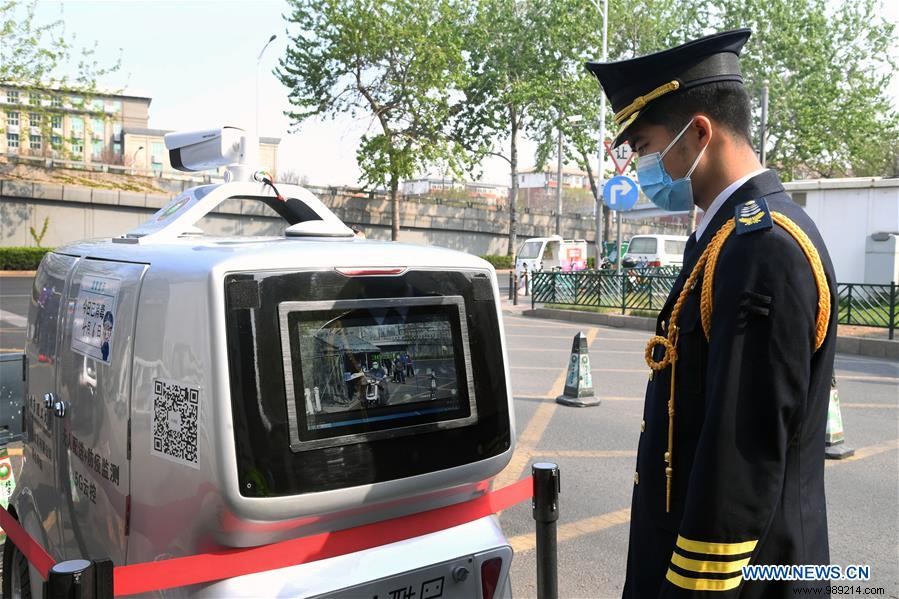
Developed by Cool High Technology and the Beijing Institute of Technology, this compact vehicle—too small for human occupants—can transport parcels for deliveries. Currently testing on the institute's campus, it holds potential for wider deployment.
Fully autonomous and powered by 5G, the cart builds on China's prior use of the network to bolster hospital communications, enable remote scanner analysis, and enhance image quality—minimizing staff-patient contact.
Yet, experts like Benjamin Cowling, an epidemiologist at the University of Hong Kong, argue such measures fall short. He deems a second wave inevitable due to asymptomatic carriers spreading the virus silently. Random temperature checks detect cases only after outbreaks emerge, potentially amplifying China's impact.
