Water makes up about 60% of an adult's body weight, powering essential functions like metabolism, digestion, and temperature regulation. Without it, survival beyond three days is impossible. But why is water the dominant substance in our bodies rather than something else?
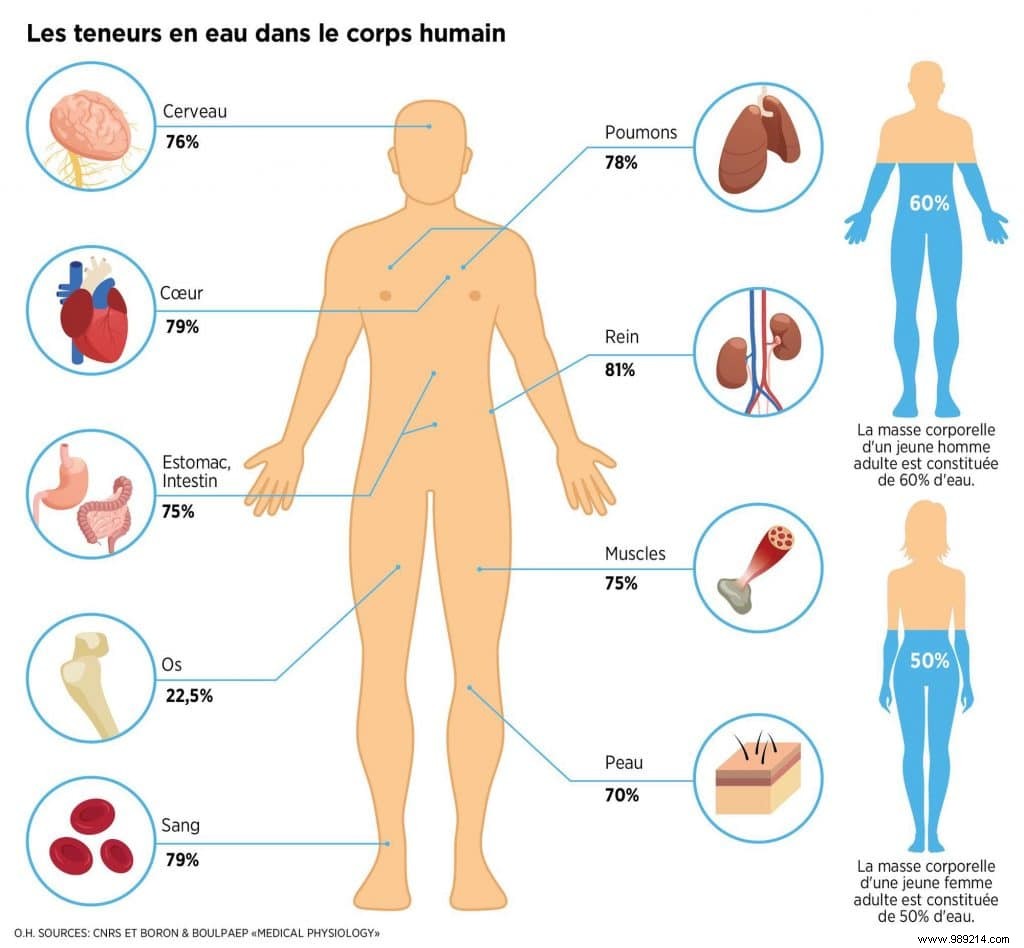
Water is the primary component of the human body. In adults, it accounts for roughly 60% of body weight—about 42 liters for a 70 kg person. Women average around 50% due to higher body fat levels. Leaner individuals have more water, and the proportion decreases with age: over 90% in embryos, 75% in newborns, as tissues dehydrate and fat accumulates.
Water distribution varies by organ: as low as 1% in tooth dentin to 81% in kidneys. Hearts, lungs, and brains—hubs of metabolic activity—are water-rich. Blood is 79% water; saliva, sweat, and lymph exceed 95%. Muscles, at 75% water, hold half the body's total due to their mass.
The body maintains water balance through constant exchange with the environment. Losses—up to 2.5% of total water—occur via urine, sweat, and breath. These are replenished by drinking, food (about 1 liter daily from a normal diet), metabolic production (0.3 liters/day), and inhalation.
Health experts recommend at least 1.5 liters of water daily. Without intake, survival is limited to 2-3 days, versus 40 days without food under rest (per CNRS data). Water abounds in our diet—liquids, fruits, vegetables—in free, bound, hygroscopic, or hydration forms. Intracellularly, it fills cells; extracellularly, it reserves space in tissues, vessels, and blood circulation.
As a universal solvent, water enables nutrient transport and waste elimination via kidneys. It drives glycolysis for ATP production, fueling muscle contraction. Dissociating into H+ and OH- ions, it catalyzes reactions, speeding them from days to seconds. "Water is the field of action for all biochemical reactions that define life," explains Bengt Kayser, professor at the University of Geneva's Institute of Sports Sciences. "All our machinery works only in aqueous solution."
Water aids food circulation and digestion, with the body supplying liters to the stomach and intestines for absorption into blood and lymph, then elimination via kidneys, skin, and lungs. It also regulates core temperature.
A 2020 Japanese study of 58 participants showed health benefits from extra water. The intervention group added two 550 ml bottles daily (post-wake and pre-bed), raising intake from 1.3 to 2.0 L/day and total body water. Systolic blood pressure dropped significantly; gut microbiome correlated with BP reduction and temperature rise. It didn't lower fasting glucose but diluted blood wastes and supported kidney function.
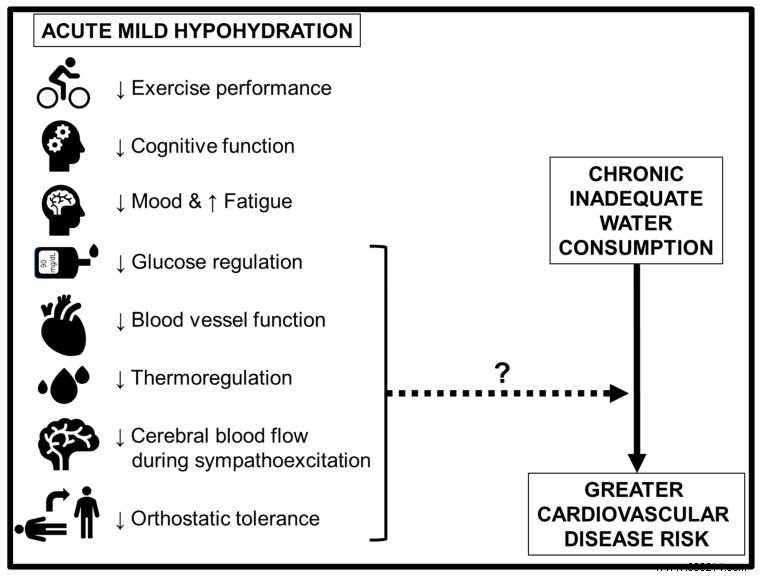
Even 2% water loss causes dehydration: dizziness, poor concentration, rapid heartbeat, dry mouth, visual issues. Studies link it to cardiovascular risks, impaired vascular function, and reduced performance, thermoregulation, and orthostatic tolerance. Low habitual intake raises future heart event risks.
Severe deficits (>6%) threaten life; 10% leads to coma and death. Every organ relies on water for optimal function, and nature provides it abundantly to meet this vital need.
