Many people overlook it, but regular blood pressure monitoring is crucial for preventing cardiovascular diseases—the leading cause of death in France.
Consistent measurements help detect arterial hypertension, the most common cardiovascular condition that can prove fatal if untreated.
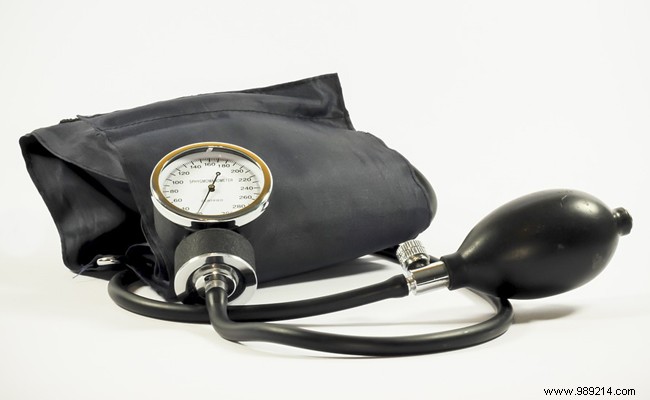
Blood pressure gauges the force exerted by blood—pumped by the heart—against artery walls, along with the volume of blood circulated. Arteries transport oxygen-rich blood from the heart to body tissues, sustaining vital cell function.
This circulatory force powers blood flow to all organs. Healthy, flexible arteries free of blockages are essential. Deviations signal hypertension (high blood pressure) or hypotension (low blood pressure).
A tensiometer, featuring an inflatable cuff and pressure gauge, measures blood pressure. A stethoscope on the artery below the cuff allows precise calculation. Readings appear as two numbers in millimeters of mercury (mmHg) or centimeters of mercury (cmHg). The top number is systolic pressure, from heart contraction. The bottom is diastolic pressure, during heart relaxation and artery refill when pressure eases.
The World Health Organization (WHO) defines hypertension as systolic pressure above 14 cmHg (140 mmHg) or diastolic above 9 cmHg (90 mmHg). A single reading isn't diagnostic—blood pressure fluctuates with stress or activity. Confirm hypertension with multiple rested measurements.
