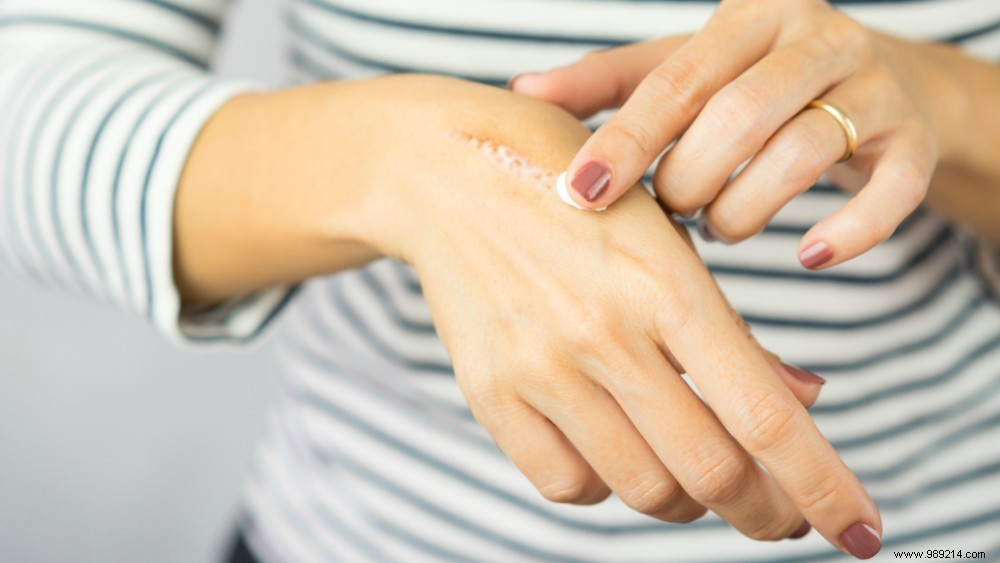
The size and thickness of a scar are partly determined by genetics, skin type, and pigmentation. Drawing from dermatological best practices, here’s what you can do to support optimal wound healing and reduce scarring.
Keep fresh wounds exposed to air whenever safe. In the first few days, while the skin is still open, skip creams or ointments. Always follow your doctor’s or GP’s specific guidance.
Read also: 'When does a scar form?'
Watch for increasing redness, throbbing, or swelling—especially in larger wounds—and seek medical attention promptly.
Prolonged water exposure softens the wound and can damage the scab, slowing new skin growth underneath.
Picking disrupts the skin’s natural repair process and may cause scarring that could otherwise be avoided.
Once healing progresses, use a light moisturizer to soothe itching. Scar-specific creams are effective—consult your doctor or pharmacist for tailored recommendations (many available over-the-counter).
Shield healing wounds and fresh scars from the sun, as UV exposure can intensify scarring. Continue sun protection for recent scars.
Scars naturally improve over the first two years, even without treatment. True results emerge after this time. For persistent older scars, discuss options with your doctor.
Image: Getty Images
