Most people slip into bed without a second thought about their sleeping position. Yet, as sleep experts and medical research highlight, how you sleep profoundly impacts your health, from spinal alignment to breathing quality.
Sleeping on your stomach, back, or side can influence snoring, sleep apnea, neck pain, and back issues. Discover the science-backed best sleeping position to minimize back pain and optimize rest:
Click here to easily print this guide in PDF.
Scientific studies show most adults prefer sleeping on their side, followed by those who sleep on their back. Only a small percentage opt for their stomach.

Sleep is vital for overall health—click here to explore its key benefits. Your position can enhance sleep quality or contribute to issues like pain or disrupted breathing. Here's a breakdown of the best and worst, informed by expert research.
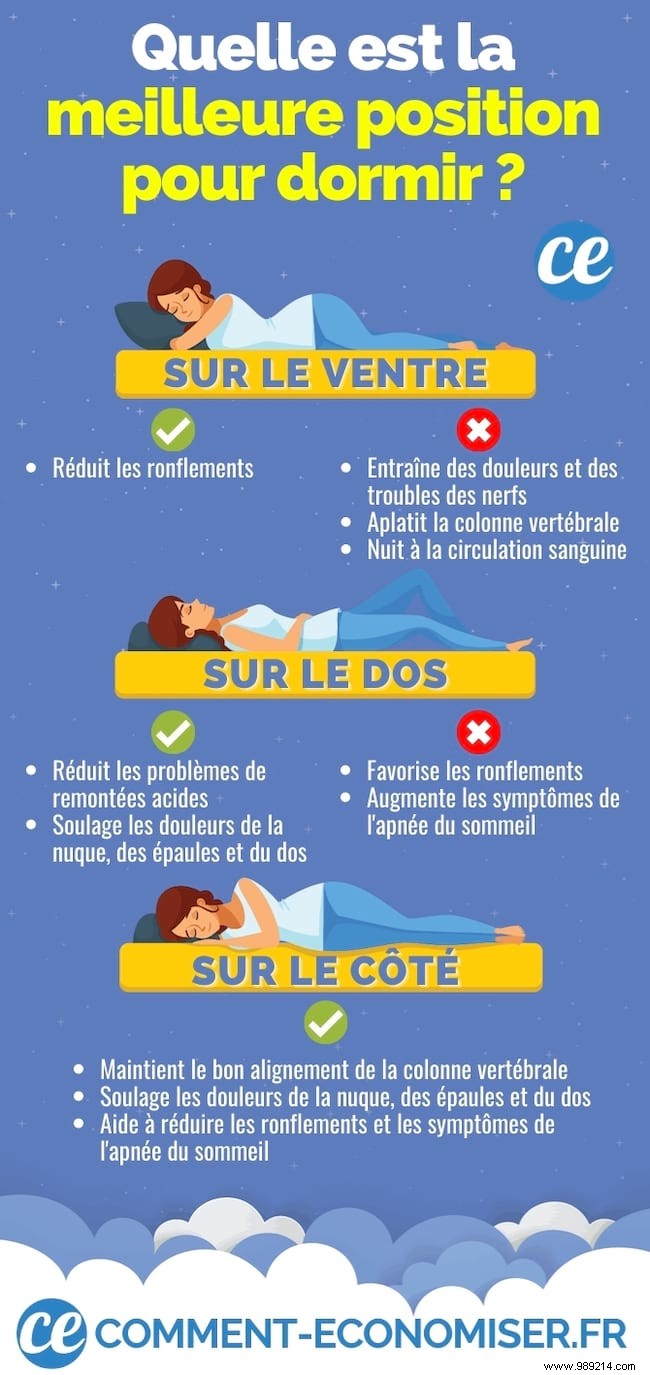
Sleeping on your stomach is uncommon—7% of adults do it. It can muffle snoring, but sleep specialists strongly advise against it.
Elevating your head on a pillow strains spinal alignment, creating tension in the back and neck. The body's heaviest part—the torso—flattens the spine's natural curve, leading to chronic pain and nerve issues over time, including numbness or tingling in limbs.
Turning your head sideways restricts circulation and airways. If stomach sleeping is unavoidable, improve it: Rest your forehead on the pillow's lower edge for neutral neck alignment and easier breathing. Slide a thin pillow under your pelvis to ease lower back tension.
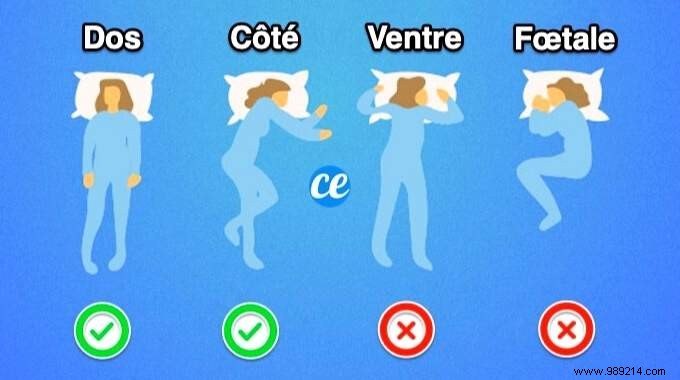
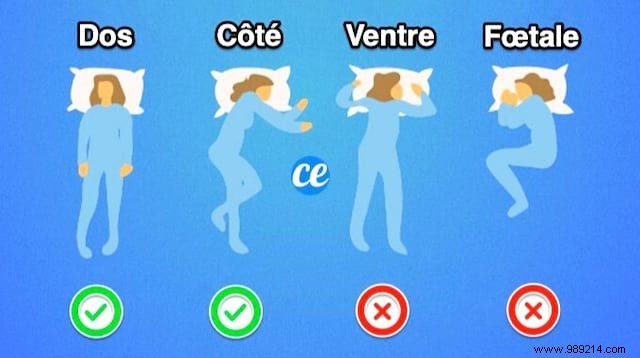
Side sleeping feels cozy but becomes problematic in a tight fetal curl, mimicking the womb position. This excessively curves the spine, causing neck and back pain or twisting.
It also restricts diaphragm movement, shallowing breaths.
The second most popular position, back sleeping promotes natural neck-spine alignment, ideal for preventing neck, shoulder, and back pain.
A slight head elevation reduces acid reflux. However, it can worsen snoring and sleep apnea as relaxed throat tissues block airways.
Consult a doctor for apnea management. For lower back pain, place a small pillow under your neck and a medium one under your knees to support the spine's curve and minimize strain.
For most, side sleeping is the gold standard, recommended by doctors for its health benefits on a supportive mattress (neither too soft nor firm). It preserves the spine's natural curves, reducing neck, back, and shoulder pain.
It's superior for snoring and apnea, keeping airways open. Research confirms it lowers apnea episodes for deeper rest. Ideal for arthritis, reflux, and pain sufferers.
Pregnant individuals should favor the left side in later trimesters to boost placental blood flow and reduce leg swelling.
Keep your body relatively straight for optimal alignment. Use a firm, medium pillow for head and neck support—sleep experts recommend orthopedic options like this one. A cushion between knees eases hip and lower back pressure.