
Do you sleep for hours yet wake up exhausted? Your sleeping position might be the culprit.
Tossing and turning disrupts restorative sleep cycles, especially for those prone to anxiety. Back sleeping often leads to neck strain from awkward pillow support.
Struggling with sleep? This expert guide, backed by health professionals, reveals the best positions for quality rest.
Find your ideal position with these illustrated tips:
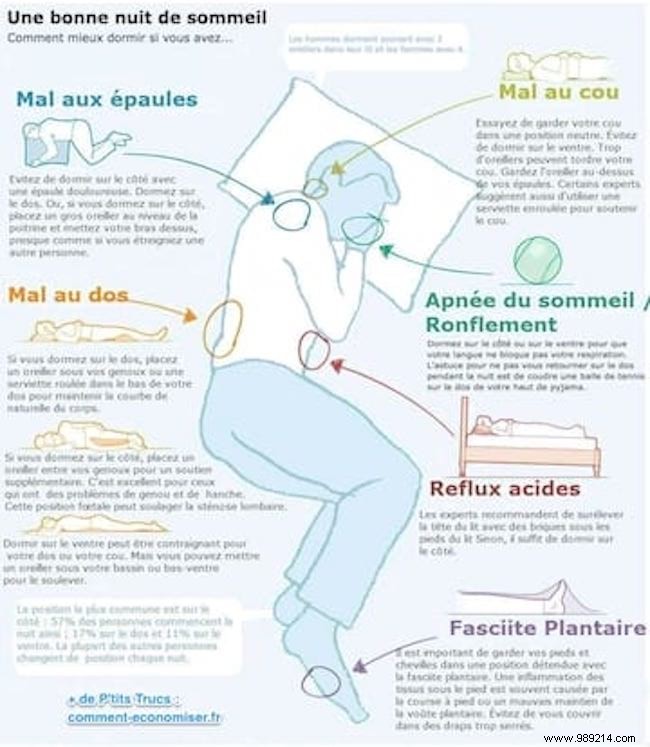
Avoid side sleeping on the painful shoulder. Opt for back sleeping instead.
If you prefer your side, hug a thick pillow at chest height to support your arm comfortably.
Back sleepers: Place a pillow under your knees or a rolled towel at your lower back to preserve your spine's natural curve.
Side sleepers: Position a pillow between your knees for alignment—ideal for hip or knee issues and lumbar stenosis relief.
Stomach sleeping strains the back and neck; elevate your pelvis with a thin pillow to reduce arching.
Maintain a neutral neck position. Skip stomach sleeping and excessive pillows that tilt your head.
Keep the pillow supporting just above your shoulders. A rolled towel can provide extra neck support, as suggested by experts.
Sleep on your side or stomach to prevent your tongue from blocking airways.
To stay off your back, sew a tennis ball into the back of your pajama top—a proven trick.
Elevate your headboard with bricks under the bed legs, per expert advice.
Side sleeping offers another effective option.
Relax feet and ankles if dealing with plantar fasciitis, often from running or poor arch support.
Avoid tight sheets to ensure good circulation.
Now you have proven positions for deeper sleep. Note: Stomach sleeping often worsens reflux and back pain.
Breaking poor habits takes time—be patient as your body adapts to healthier patterns.
