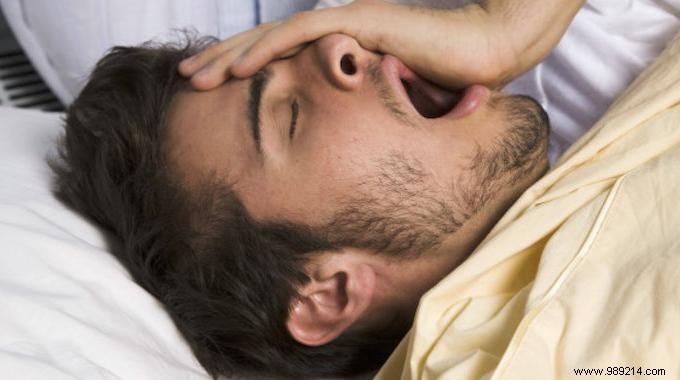
Sleep deprivation, whether intentional or not, takes a significant toll on the body. It's often likened to a form of physiological stress.
Sleep deprivation is widely recognized as detrimental. Research shows that sleeping less than 6 hours per night for just one week can disrupt the function of 700 genes.
Even mild sleep shortages harm health, as confirmed by multiple studies. In France, 17% of adults aged 25-45 experience chronic sleep deprivation.
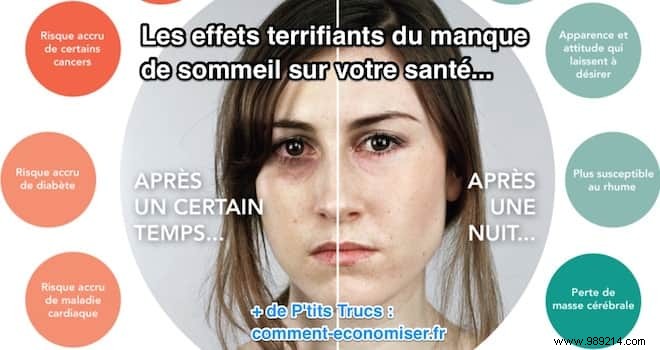
Additionally, 45% of respondents report sleeping less than needed, per an INPES study. Experts recommend 7 hours of sleep nightly; falling short creates a sleep debt that affects body and mind.
This infographic illustrates the effects of even one night of insufficient sleep:
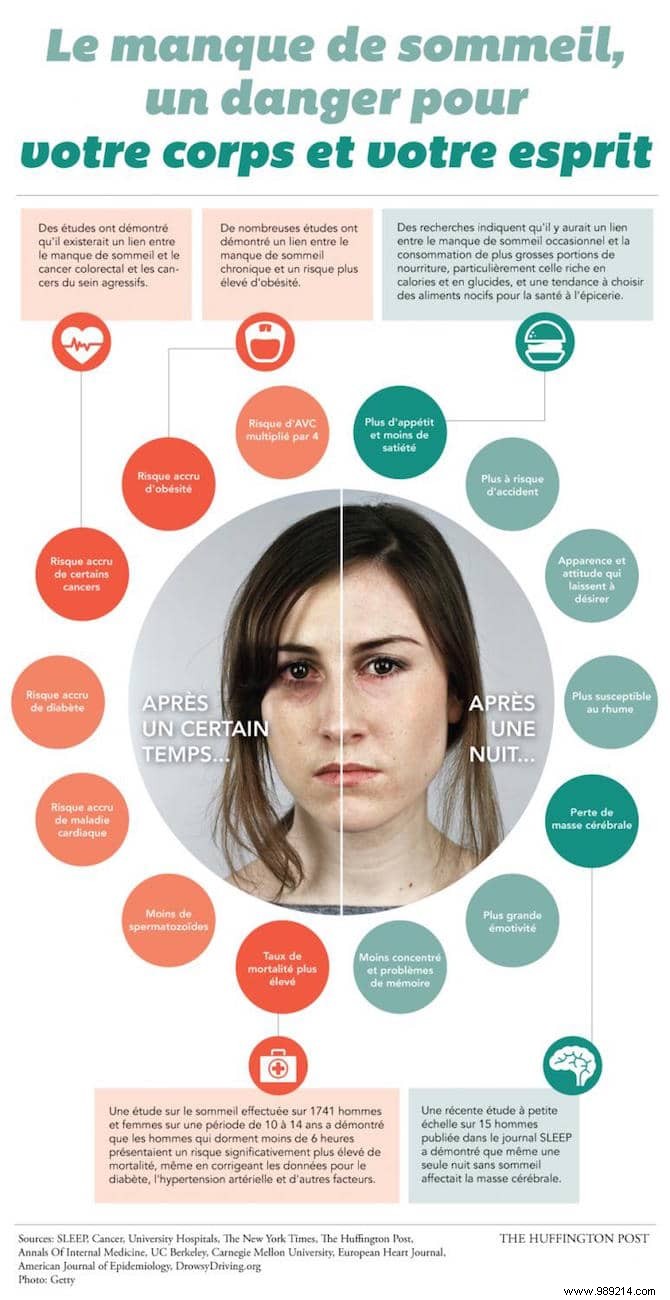
Source: Huffington Post; infographic by Alissa Scheller
Increased hunger and altered satiety: Sleep loss boosts appetite. Studies link short-term deprivation to larger portions, cravings for high-calorie, carb-rich foods, and poor grocery choices favoring unhealthy options.
Higher risk of accidents: Sleeping under 6 hours triples road accident risk, per research. A single poor night impairs eye-hand coordination (Manchester Metropolitan University) and increases clumsiness overall (Prevention website).
Decline in physical appearance: Restorative sleep is essential. A SLEEP journal study found sleep-deprived individuals appear less attractive and sadder. Swedish research shows tired people are harder to approach socially. In older adults, sleep loss accelerates skin aging.
Weakened immunity: Fatigue raises cold risk threefold if sleeping under 7 hours (Carnegie Mellon University). Sleep triggers cytokine production for immune defense; deprivation reduces these proteins, antibodies, and infection-fighting cells (Mayo Clinic).
Brain mass loss: One night of poor sleep elevates brain injury markers, indicating tissue loss (SLEEP journal).
Heightened emotions: Tiredness amplifies emotional reactivity by 60% (UC Berkeley and Harvard Medical School imaging studies). Matthew Walker, UC Berkeley Sleep and Neuroimaging Lab director, notes: "Sleep-deprived brains revert to primitive responses, struggling with contextual emotions."
Impaired concentration and memory: Fatigue disrupts focus and recall—think lost keys or forgotten items. Harvard researchers explain sleep consolidates memories; deprivation hinders learning and retention.
Quadrupled stroke risk: Sleeping under 6 hours raises stroke odds fourfold in midlife adults (2012 SLEEP conference). University of Alabama's Megan Ruiter states: "Those sleeping 7-8 hours had far lower risk."
Obesity risk: Chronic short sleep alters ghrelin/leptin (Penn State), promotes overeating, and correlates with weight gain—up to 1 kg after 5 nights (University of Pennsylvania).
Cancer links: Colonoscopy study of 1,240 people: <6 hours sleep hikes colorectal adenoma risk 50%. 2012 research ties it to aggressive breast cancer; sleep apnea also correlates.
Diabetes risk: Sleep loss disrupts hormones, insulin sensitivity, and contributes to type 2 diabetes (2012 study).
Heart disease: Short or poor sleep elevates hypertension, atherosclerosis, heart failure, and stroke risks (Harvard Health; Warwick Medical School). Francesco Cappuccio (European Heart Journal): <6 hours raises cardiac death risk 48%, stroke 15%. "Late nights and early rises are a health time bomb—act now."
Reduced fertility: Severe disturbances cut sperm concentration 29% (2013 American Journal of Epidemiology, 953 Danish men).
Premature mortality: <6 hours sleep heightens death risk over 10-14 years, beyond diabetes/hypertension factors (SLEEP study, 1,741 adults).
Source: Huffington Post
