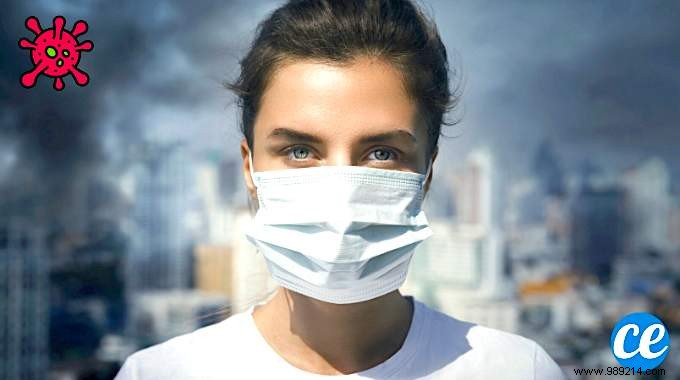
Scientific studies confirm that well-made homemade masks help slow the spread of respiratory viruses like COVID-19. A double layer of cotton fabric provides 70% of the filtration efficiency of a surgical mask for small particles.
Here's a simple, proven tutorial to create an effective homemade mask using everyday items—in less than a minute.
- A bandana
- 2 large rubber bands
- 1 paper towel
1. Lay the bandana flat on a table.
2. Fold it in half, then in half again.
3. Position the two rubber bands to divide the bandana into three equal parts.
4. Fold the right side toward the middle.
5. Open it slightly and tuck the left side in.
6. Pull the rubber bands to secure each side.
7. Insert a paper towel inside the mask (replace it each use).
8. Hook the rubber bands behind your ears to wear.
This quick method yields an easy-to-make, effective mask without needing to visit stores.
Studies indicate that widespread mask use—50% of the population—could halve infections, while 80% adoption can halt outbreaks.
For optimal results, use cotton fabric with a paper towel filter. Any mask is better than none.
Before use:
1. Wash your hands thoroughly.
2. Replace the mask if it becomes wet.
3. Always clean before reuse.
To remove:
1. Touch only the rubber bands; avoid the front.
2. Wash hands immediately with soap or sanitizer.
3. Soak and scrub the mask in soapy water.
The World Health Organization recommends masks for those with COVID-19 or caregivers, but since many cases are asymptomatic, universal use is prudent.
Czech Republic mandated homemade masks early; compliance reached nearly 100% in days, flattening curves dramatically:
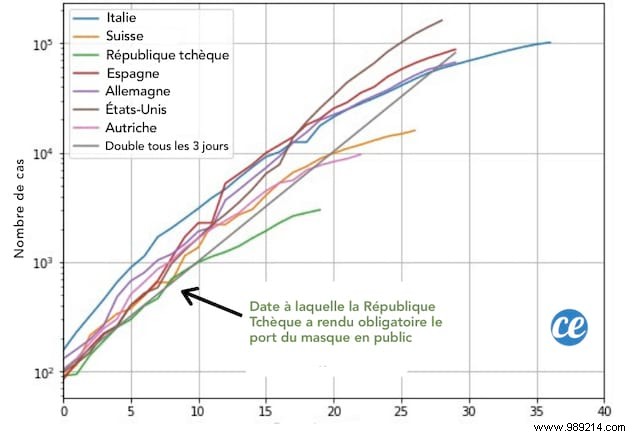
Central European nations followed, inspired by successes in China, Taiwan, South Korea, and others—avoiding strict lockdowns via masks (Wall Street Journal).
A 2008 U.S. National Library of Medicine study notes: "Homemade masks reduce viral exposure at the population level, even if not perfectly fitted."
Hong Kong, Mongolia, South Korea, and Taiwan maintained control without lockdowns through mask-wearing (Washington Post).
"The key mistake in the U.S. and Europe is not wearing masks... Droplets from talking spread the virus, and masks prevent this" (China CDC Director).
Masks complement, not replace, handwashing, 1-meter distancing, and other measures.
