Native to Asia, the lemon tree is a small evergreen species introduced to Europe around 200 A.D. Originally cultivated as an ornamental plant, Citrus limon is also a nutritional powerhouse, rich in antioxidants and vitamin C—twice the amount found in oranges. Certain compounds may even help reduce risks of cancer and chronic diseases.
Lemon adds bright flavor to foods and drinks with its signature acidity and sweet-tart profile, making it a cooking staple. For cleaning, it's unparalleled as a degreaser, disinfectant, and antibacterial agent, thanks to limonene and citric acid.
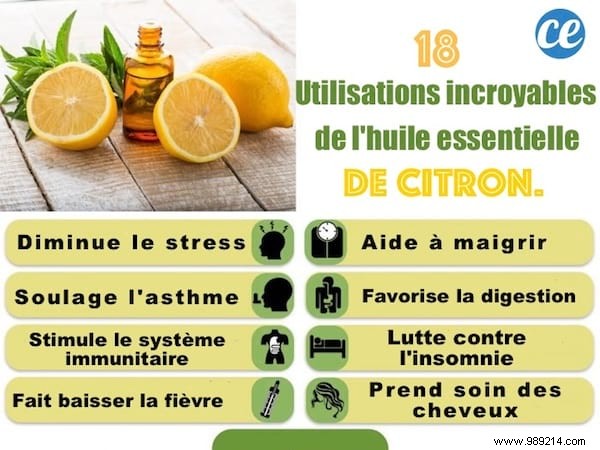
Lemon essential oil captures these virtues in concentrated form. Its refreshing scent enhances cleaning, while retaining antifungal, astringent, and antiseptic properties. Discover 18 proven uses below.
Candida albicans causes oral thrush and mucous membrane infections, affecting skin, throat, mouth, and genitals. Untreated, it can enter the bloodstream. Lemon essential oil's antifungal properties make it a natural remedy for fungal infections.
A recent study showed lemon oil inhibits growth of various Candida strains, likely due to its high monoterpenoid content with antimicrobial effects.
Try this remedy: Mix 750 ml lukewarm water, 2 tbsp vinegar, 3 drops lemon essential oil, and 4 drops tea tree oil. Apply to affected areas with a clean cotton ball. Consult a healthcare provider if no improvement after one week.
Common pains include lower back, headaches, neck, and facial pain—whether acute or chronic, they disrupt daily life. Aromatherapy with lemon essential oil can reduce pain signals in the brain.
Research shows inhaling it decreases pain behaviors (like startling or bending). It boosts c-Fos production, a gene and protein regulating nerve cell survival.
Ever noticed lemon essential oil's invigorating yet calming effect? A study on 56 volunteers exposed to lemon, lavender, or placebo scents during stress found lemon oil promoted positive mood—even with hands in ice water.
Norepinephrine levels stayed elevated, supporting cognition and learning for better mood and focus.
Lemon oil uniquely stimulates while relaxing, offering antidepressant and cognitive benefits. Aromatherapy calms nerves and eases stress.
One study ranked lemon most effective against stress compared to lavender and rose. In rats, it lowered corticosterone levels.
Lemon essential oil aids weight loss by dissolving fat and curbing appetite. Lemon peel's limonene promotes lipolysis, breaking down stored white fat.
Studies confirm this link. For a massage blend: 75 ml sweet almond oil, 7 drops lemon oil, 7 drops grapefruit oil. Massage treated areas in circular, upward motions.
Over half of pregnant women experience nausea, sometimes lasting months. A trial with 100 participants found inhaling lemon essential oil at onset significantly reduced symptoms.
As an astringent, lemon oil tightens tissues for deep skin cleansing, especially oily skin. It reduces sebum, combating acne and cysts.
Lotion recipe: 125 ml water + 125 ml witch hazel + 40 drops lemon oil. Apply nightly. Caution: Photosensitizing—avoid sun exposure.
Excess sebum from scalp glands leaves hair greasy and flat. Lemon oil rebalances sebum production for cleaner, voluminous hair.
Shampoo: 125 ml Castile soap + 250 ml water + 20 drops lemon oil (use 2x/week).
Rinse: 250 ml water + 2 tbsp apple cider vinegar + 3 drops lemon oil.
Enhance vinegar's cleaning power with lemon oil's antiseptic, antifungal, and disinfectant properties for a fresh scent. Recipe: 625 ml water + 2 tbsp Castile soap + 10-20 drops lemon oil.
Biodegradable and chemical-free: 500 g soda percarbonate + 750 ml dish soap + 500 g baking soda + 2 grated Castile soap bars + 30 drops lemon oil. Lemon replaces bleach for whitening.
Avoid harsh chemicals—use lemon oil for shine and protection. Recipe: 125 ml olive or almond oil + 10-15 drops lemon oil.
Natural alternative to chemical wipes. Prepare, use, wash cloths, and reuse.
A natural antiseptic for cuts, scrapes, burns. Balm: 50 g beeswax + 200 ml coconut oil (melt), add 12 drops each lemon, lavender, tea tree.
Spray: 75 ml water + 6 drops lemon + 12 drops tea tree + 6 drops eucalyptus.
Eliminate odors: 250 ml water + 24 drops lemon oil in a sprayer.
Inhalation clears passages for better breathing, reduces stress-triggered attacks, and boosts immunity.
Diffuse for calming effects to promote restful sleep and ease insomnia.
Purifies for relief from indigestion, reflux, cramps.
Antiseptic action fights germs; vitamins strengthen immunity for faster recovery.
Opt for organic from health stores, pharmacies, or online.
Photosensitizing: Avoid sun/UV for 12 hours after skin application. Dilute to 2% (12 drops per 30 ml carrier oil). Patch test first. Not for children, pregnant/breastfeeding women, or animals. Consult professionals if unsure.
